Arm Path and Pitching Velocity

August 24, 2011

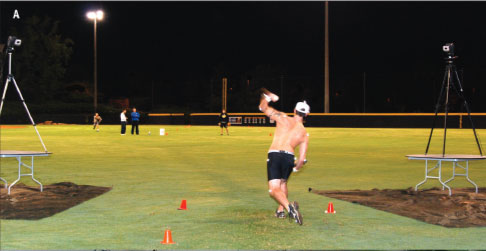
Conventional wisdom would say the path that the arm takes during the delivery is significant to velocity. If you look at Newton’s Second Law of Motion you will find that the path has nothing to do with the velocity of the ball. Acceleration or the velocity of the ball is determined by the force applied, divided by its mass. We know that the path does not change the mass or the force applied, so conventional wisdom would be wrong in coaching the arm path as having an effect on velocity. Read more

The Phenomenon of Speed Mechanics!

January 9, 2010

We have all heard about the importance of Momentum in pitching but do we really know what it means? Velocity is a product of Momentum and Rotational Torque. I believe that Top Velocity is achieved when both rotational torque and momentum meet. The problem is we all understand rotational forces when throwing but momentum seems to be a lot harder to truly understand and implement into our deliveries. To truly understand Momentum, I have coined a new term, along with its description. Read more

Comparison of High Velocity and Low Velocity Pitch Deliveries

June 18, 2009

Baseball ResearchStodden DF, Fleisig GS, McLean SP, Lyman SL, Andrews JR. Relationship of pelvis and upper torso kinematics to pitched baseball velocity. Journal of Applied Biomechanics 17(2):164-172, 2001.

Matsuo T, Escamilla RF, Fleisig GS, Barrentine SW, Andrews JF. Comparison of kinematic and temporal parameters between different pitch velocity groups. Journal of Applied Biomechanics 17(1): 1-13, 2001.

Stodden, DF, Fleisig, GS, McLean, SP, Andrews, JR. Relationship of Biomechanical Factors to Basebal Pitching Velocity: Within Pitcher Variation. Journal of Applied Biomechanics 21(1): 44-56, 2005 Read more

Separation, the Safe Zone and the Power Curve

October 11, 2008

I just read Chris Oleary’s article on the “Safe Zone.”

http://chrisoleary.com/projects/Baseball/Pitching/PitcherInjuryAnalysisProject/Patterns.html

It is always nice to find unconventional thinking when it comes to pitching instruction. I recommend you read his article. I was forced in my early career to overcome a serious shoulder injury, because I wasn’t taught this important piece of information. Ever sense my almost career ending injury, I have been coaching this theory, but never referred to it as the “Safe Zone.” I will now!

Read more

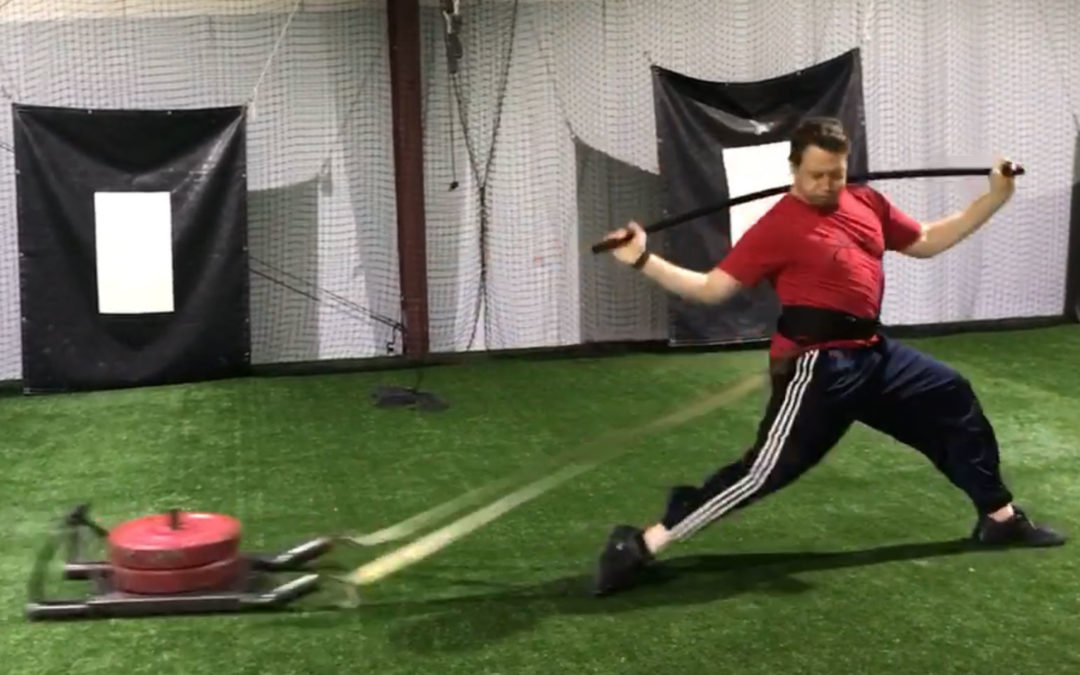
Resisted Sprints and Effects on Kinematics and Sprint Speed

August 24, 2008

by Chad Englehart

Speed Training

Implied in any linear speed discussion with a Strength and Conditioning Specialist, is the concept of resisted speed training strategies. Some professionals consider resisted speed training as the most efficient sprint training technique on the planet, while other consider it not as effective because of a biomechanical stand point. Different resisted speed strategies include, towing, uphill sprints, sand sprints, and weighted sprints. Tahachnik (1992) explained that towing of weighted devices such as sleds and tires is the most common method of providing towing resistance for the enhancement of sprint performance, although the use of parachutes has also Read more