Bad Mechanics is a Sign of Muscular Weakness
February 10, 2009
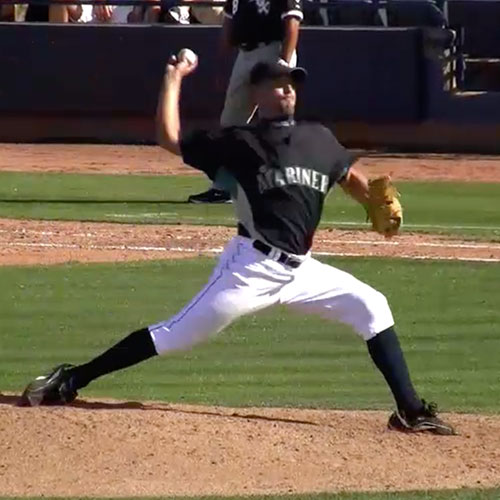
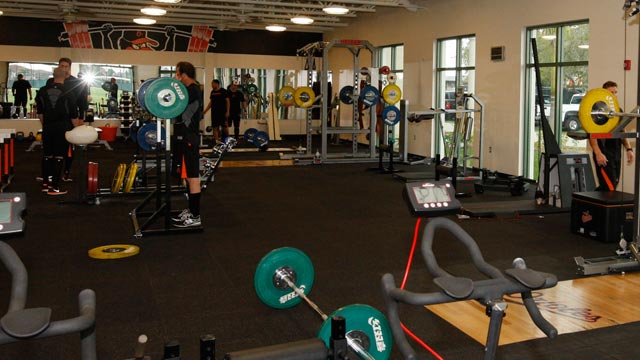
Above average coordination is a sign of fast twitch muscle strength. Fast twitch motor neurons recruit more muscle fibers. This means more control of the body and also more explosive power. The biggest problem for a pitching coach, when working with a pitcher who does not have good hip rotation or who does not load and build a full body stride, is that this is the result of poor core and leg strength and no mechanical drill will fix this problem. Drills only help pitchers who are having a hard time changing flawed muscle memory. It doesn’t help pitchers who have good muscle memory but poor muscle strength. This is why we have weight rooms. This is why any coach who tells you that weight lifting will NOT help you as a pitcher is clueless and is wasting your time and maybe even your money. A good strength and conditioning program that incorporates Olympic lifts, plyometric training and an intense speed training program is estiental to developing good pitching mechanics. Good athletes make good pitchers. Read more
Just Say NO to Long Distance Running
January 8, 2009
If your Coach or Trainer has you running for longer than five minutes at a SLOW pace then you are training to be just that…………………………………. SLOW! Muscles have a mixture of two basic types of fibers, fast twitch and slow twitch. Fast-twitch fibers are capable of developing greater forces and contracting faster and have greater anaerobic capacity. Anaerobic means exercise without the use of oxygen as an energy source; short bursts of vigorous exercise. Sprinting is an anaerobic exercise. In contrast, slow-twitch fibers develop force slowly, can maintain contractions longer and have higher aerobic capacity. Aerobic means exercise in which energy needed is supplied by oxygen inspired and is required for sustained periods of vigorous exercise with a continually high pulse rate. Long distance running is an aerobic exercise. Read more
Baseball Pitching Workout – Beginner
December 9, 2008
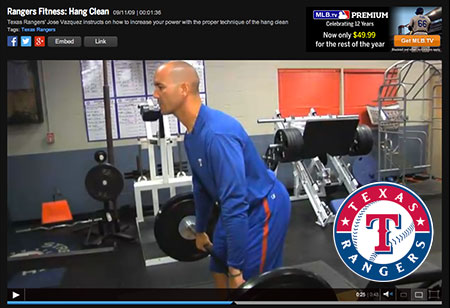
This is an excellent beginner workout. It focuses on training the body as a single unit. All these lifts support the development of Fast Twitch Muscle Fibers which will make you more explosive as an athlete. This workout was developed for pitchers but recommend for all positions. When starting this beginner program for the first time, make sure you keep your lifting weight down. Use the bar to start and once you gain confidence in your lifts, you can begin to add weight and use the percentages listed. Select the images below the workout of the lifts to view the instructional video. You can also view the Coach Gayle Hatch instructional videos here: Coach Hatch Videos to learn the lifts. Coach Gayle Hatch is a legend in the sports training world. He is most know as the 2004 USA Olympic Lifting Coach and was just named the World Coach for 2009. Some of the lifts do not have instructional videos. Search the web for exercises that would fill the role. Read more
Tim Lincecum Slow Mo
November 5, 2008
Tim Lincecum is the picture perfect little guy in the big leagues. View his delivery below and notice his amazing ability to generate momentum in his small frame. It looks like his body is taking a ride down the hill. Most importantly watch his ability to control and time the momentum he is generating. Not only is he explosive like a gymnast but he is as efficient as a machine.
Read more
Weight for it!
October 20, 2008
Momentum transfer is a key component of velocity. There are many different ways to transfer momentum. You could transfer the momentum slowly over a certain period of time, randomly over a certain period of time or in the case of generating efficient and explosive velocity, you must transfer momentum as quickly as possible during your pitching delivery.
Notice pitcher’s like John Smoltz here, he has a delivery that looks effortless. This is because the explosiveness of his delivery comes at a point in time that is so fast it fools the human eye. Think of a golfer like Tiger Woods. When he swings the club back, if you blink your eyes he has already hit the ball and is following through. The same is with pitchers like John Smoltz. He throws in the upper 90′s but it sure doesn’t look like he does.
The question is, “How does this happen?” What these pitchers are doing, as they start to build momentum, is hold all of their weight back waiting for the last possible second to transfer the momentum as quick as they can. The best way for you to get a good understanding of this is with video. I hope this helps. Read more