injury Pitching Articles

Here are some pitching articles on this important pitching velocity topic. This topic is currently open for discussion. You can either comment on the articles below or start a thread in the pitching forums.
Why Pitchers Should ICE Their Arms?

by Brent Pourciau · May 9, 2009
There is a lot of controversy around pitchers and icing their arms post game. After surgery I was very strict when it came to icing post game. I know that it isn’t enough for me here to just say that, “Hey, I did it, so you should too.” So, I took some time to research the web and I found several websites reference the work of Dr. Meeusen from Antwerp, where I played some professional baseball. He based his life study around icing as a means to help heal a damaged muscle. His documentation describes how ice can be effective and where it can cause problems.
Research by Dr. Meeusen on Icing a Pitchers Arm
Boost Your Testosterone And Growth Hormone Levels Naturally

by Brent Pourciau · February 1, 2009
Using steroids and growth hormone (GH) injections to increase your levels of testosterone and GH has more bad side effects than positive returns. This is why I speak against these illegal drugs. Through proper strength and conditioning, an athlete can naturally stimulate their bodies testosterone and GH levels. The reason for athletes increasing these levels is to grow bigger, stronger, faster, which means your body is healing faster than it is breaking down. This is very beneficial for pitchers because quicker recovery between appearances will result in more velocity, better consistency and less chance of injury. This is why the Michell Report was full of professional pitchers using these illegal substances. These pro pitchers were looking for the hormonal edge but going at it in the wrong direction. Thank you to the strength and conditioning world, we have now learned that the hormonal edge can be obtained naturally, through a proper strength and conditioning program. Read more
Pain In Triceps And Biceps When Pitching

by Brent Pourciau · February 1, 2009

* If you have shoulder pain and you would like to heal the rotator cuff without surgery checkout this page.
So you have pain in triceps and or biceps when pitching and it has more than likely been hurting for a while. You are searching the web for answers because you need this pain to go away so you can get back to business. I get it! I was you in my career.
When I had this problem and I couldn’t find the answers to a quick fix of the problem, I just looked for ways to hide the pain. I was taking Advil almost everyday and I started to have to take tons more of it because the pain was getting worse. The pain first started in my elbow and then it moved up my bicep into my shoulder.
It got so bad that I had to take the maximum dose of pain killers, along with icy hot, and in between innings I had to hit my arm so I would feel the pain of the hit and not the pain coming from my throbbing arm. This was the day that my rotator cuff tore and my career completely stopped. I was shocked and depressed at this time in my life because I had let the pain get so bad, that it ended my career.
I Want to Help You Remove This Pain
I am writing this article here to help you because I wish someone would have helped me at that point in my pitching career when the pain first started. If you have pain in your lower, or upper bicep, or your lower or upper tricep and maybe even in the back or front of your upper forearm, you are overusing and abusing your arm. If you have anyone or all of these pains, then you need to stop and listen to your body.
Pain is your bodies way of telling you that something is wrong. Pain does not just go away. It will only get worse, like it did in my career, if you do not make some changes immediately. Unfortunately, you should have not waited this long to make the changes but better late than never! Read more
Fast Twitch Pitching

by Brent Pourciau · January 28, 2009
Professional Baseball is full of genetic freaks. Long and slender pitchers who throw mid to upper 90′s like A.J. Burnett and Aroldis Chapman. At this moment, Major League scouts are combing the earth looking for these rare specimens. This is why it is so exciting when someone like Tim Lincecum at 5’9 170 pounds, throwing 95 mph, comes along and blows everyone’s mind. Yes, Tim is a new kind of freak but what he proves is that throwing hard can also be a little mans game. Tim is evidence that the strength and conditioning world is not just hype. It is real and it is the fountain of success for any athlete. It teaches why someone like Tim Lincecum throws as hard as someone the total opposite in size, like A.J. Burnett or Aroldis Chapman. Why doesn’t Major League Baseball teach little guys to throw as hard as big guys? Because they do not have too. Major League Baseball is like a spoiled child. It gets everything it wants. Therefore, they have no need to make what they already have. Read more
Pitcher’s It Is Time To Start Juicing!

by Brent Pourciau · January 20, 2009
After my almost career ending rotator cuff injury, I decided to devote myself to understanding the body so I could somehow find a way back to the game I love. What I learned was I had bad mechanics as a young pitcher. I also learned that I did not train enough or when I trained it was completely wrong. I also learned that my diet was that of a dog and not a diet of a high performance athlete. It is important, as athletes, that we eat the balanced diet we have been told about all of our lives. We avoid listening to these words of wisdom because we eat what we want to eat. The reality is most young athletes have not faced a career ending injury. If someone was to tell you that you could avoid any serious injury in sports and prolong your career as an athlete, if you eat 5-6 servings of vegetables a day, would you do it? Read more
How A BAD Pitching Coach Can Ruin A GOOD Pitcher

by Brent Pourciau · January 18, 2009
Ultimately, your pitching Coach is your boss. If you piss him off, there is a good chance you may be out of a job. The problem is if he is a BAD pitching coach, he could jeopardize your career. It has happened many times before. The key is to keep the Coach happy, while you find the best support you can, to help influence your career.
What makes a BAD pitching Coach?
Someone who has no experience in playing the position at the top levels of the game, or someone who has no certified education of how to coach the position. Read more
Overload To Underload – Right Concept, Wrong Approach

by Brent Pourciau · January 14, 2009
Using the overload to underload approach to train a young pitcher’s arm and central nervous system to increase arm speed is the right concept but the wrong approach when using weighted baseballs on a young pitcher. The problem is with using weighted baseballs on a young pitcher, who more than likely does not have the motor coordination of high velocity mechanics, is that it sacrifices the arm to teach the body how to move weight more efficiently and quickly. To understand how backwards this weighted baseball approach is for the young pitcher we must first look at what role the arm plays in the entire pitching delivery. Read more
Poor Posture Causes Injury And Decreases Pitching Velocity

by Brent Pourciau · January 12, 2009
Poor posture is a sign of weakness and laziness. Because it is seen as being “Cool” to lounge around in class or hanging out somewhere, this is causing poor posture in young athletes today. DO NOT ALLOW THIS TO HAPPEN TO YOU. Poor posture will lead to an arm injury, especially in pitchers. If this is you, then you must read this article.
How to Avoid an Impingement
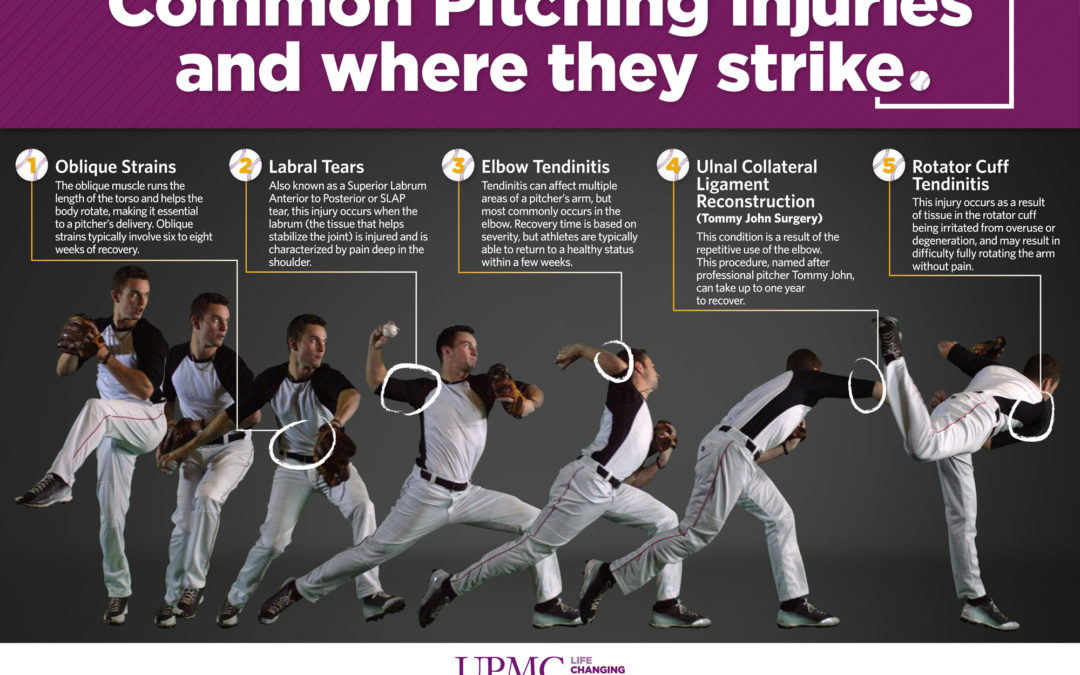
Notice the image below of the subacromial space. When the arm is relaxed and down, there is enough room for the shoulder to rotate internally and externally but when the arm is raised above the head, in a throwing position, the subscromial space is almost closed. This can easily cause an impingment of the rotator cuff muscle, mainly the supraspinatus. Poor posture makes this even worse. This is because the shoulders are forward and the acromion is positioned more on top of the supraspinatus muscle impinging the muscle even more. With poor posture and the constant internal rotation of the arm during a pitch, over time this will start to tear the muscle. This could lead to a complete tear of the rotator cuff. Read more
What You Need To Know About The Pitching Shoulder

by Brent Pourciau · January 9, 2009
This article is for every athlete out there. I am an athlete, who overcame a career ending rotator cuff tear in college, to pitch again and make it to minor league ball. I was told I would never pitch as hard as I did before the tear. I topped out at 94 mph my last season for the San Diego Surf Dawgs, over eight years later. That was more than 8 mph from before surgery. It was a long road and I am here today to teach you everything you need to know on how to prevent this from happening to you. Read more
How And When To Rest When Pitching

by Brent Pourciau · January 7, 2009
When we rest as pitchers, during a game in between pitches, it is important that we restore our ATP. This can take up to three minutes to completely restore. More ATP in our system means more explosive energy in our muscles. The problem is in between innings we usually get a lot more than three minutes. This means we have more than enough time for our bodies to replenish ATP.
The question now becomes when does our bodies begin to shut down and cool off? This happens once your heart rate drops to a resting heart rate. Those of us who have done this understand that this causes our arms and bodies to stiffen and grow sore. When this happens we must start over again and perform a proper warm up to prevent injury. In the heat of the game, warming up again usually doesn’t happen. So we jump back on the mound with that sore, stiff arm and our endorphins take care of the pain. This over time will end a career short. Read more
Pitching Nutrition And Supplements

by Brent Pourciau · December 24, 2008
Pitchers and all athletes who reach the high school, college or pro levels are always looking for an edge. The athletic supplement market has exploded in the past decade to fill this need. If it isn’t steroids then athletes are looking for the next best thing. I will say it here again, steroids are not the edge you want. It takes you out of your game because you do not own it. What I mean is, however you perform when you are on a steroid or illegal drug, you will only be able to be that person when you are using the drug. This is what causes abuse and serious long term problems. Read more
Pitching Torque And The 3 Pivots

by Brent Pourciau · December 16, 2008
The most important component of the pitching delivery is what is called, “Separation.” This is the separation of the hips and shoulders at front foot strike. This is what builds torque mainly in the core instead of the arm. This component will not only increase velocity but save a pitchers shoulder. Most high school and college pitchers have poor “Separation.” I have written about this component in just about every article on pitching velocity. I will once again define this into more detail.
The picture here of Felix Hernandez pretty much says it all. You can see the “Separation” from his hips to shoulders. It is like he is a towel being rung out to dry. Tim Lincecum calls this tightening his “Rubber Band.” The “Rubber Band” being his core. To understand why this is so effective in increasing velocity and preventing injury, we must first look at the bio-mechanics of pitching. Read more
10 Legitimate Tips To Pitching Velocity

by Brent Pourciau · December 1, 2008
There are hundreds of Pitching Tips for Baseball on the web titled something similar to this article, but most of them are worthless, because they focus mainly on upper body mechanics as the means to developing velocity. Any hard thrower will tell you, there is a lot more to pitching velocity than just your arm. If you want to see significant gains in pitching velocity then read all of these key Baseball Tips on Pitching and the articles linked to it. The only way you are going to see improvements, is if you develop a good understanding of how pitching velocity is generated in hard throwing pitchers.
Remember you are bound by nothing. You have the ability to throw 90+ mph. Doctors told me I would not be able to and I proved them wrong. These tips will help you do the same. Read more
Bigger, Stronger, Faster!

by Brent Pourciau · November 26, 2008
It is almost December, so this is your last chance for athletic improvement before the season begins. For all those college pitchers and ball players getting ready for the 2009 season, don’t be that guy who walks into spring with the Thanksgiving, Christmas belly. I am not saying, “Do not eat this holiday” but I am saying, “Do not sit on your butt!” You may think Coaches have their lineup and starters set pre-season but the truth of the matter is, this can change if someone drags their out of shape butt into spring training.
Violence And The Pitching Delivery

by Brent Pourciau · November 18, 2008
I don’t mean to mislead you with the title. Some of you may have expected the first sentence to be something like, “Study proves that Pitchers are more prone to violent behavior.” This may be true for athletes but this isn’t what I am writing about in this article. I am writing about “Violence,” the way I would write about “Power” in the pitching delivery. I use the word “Violence” to make a point. Before I attempt to make the point, let’s look at the definition.
Define Violence: Violence is the exertion of physical force so as to injure or abuse.
Now why would I want to use the word “Violence” to make a point about something as delicate as pitching? The same reason companies use the word “Maximum Strength” to describe something as delicate as medicine. Jerry Seinfeld has some great comedy on this topic. Read more
Dr. James Andrews

by Brent Pourciau · October 15, 2008

Dr. Andrews is Mr. Fixit when it comes to the elite athlete. He has poineered the sports medicine industry. He has worked on the likes of Michael Jordan, Jack Nicklaus, Drew Brees, Roger Clemens, Bo Jackson, and pretty much any other famous athlete you can think of who has been injured. This page is an honor to his amazing impact on sports medicine and a reference to what he has to offer the athlete today. Read his BIO to learn more about him and watch the videos to pick up some helpful tips. Read more
How To Prevent Or Overcome Shoulder Surgery?

by Brent Pourciau · October 9, 2008
This article is for every athlete out there. I am an athlete, who overcame a career ending rotator cuff tear in college, to pitch again and make it to minor league ball. I was told, I would never pitch as hard as I did before the tear. Over six years later, I topped out at 94 mph my last season for the San Diego, Surf Dawgs. That was more than 8 mph from before surgery. It was a long road and I am here today, to teach you everything you need to know on how to prevent this from happening to you.
Injury Prevention Starts with Learning the Shoulder
You must first learn these small muscles. These muscle are your career. They are here to internally and externally rotate your arm which is the act of throwing a baseball. The most important information to remember about these muscles are that they can only handle around 5 pounds of pressure each. The deltoids take over if the pressure exceeds this amount. So this means, all we need is 3 to 5 pounds to strengthen the rotator cuff muscles. Anything more will prevent you from isolating them properly, for development. Read more
The Principle Of Specificity And Sport

by Brent Pourciau · August 24, 2008
by Chad Englehart
Introduction
Specificity of Training principle is one of the most utilized training principles used by exercise professionals today. (Kramer et al., 2002) discussed the principle of training specificity and explained that the training responses elicited by a given exercise mode are directly related to the physiological elements involved with coping with the specific exercise stress. What this means is that if an athlete wants to perform better at a particular event or skill they must train specifically for that particular skill. For example, if an athlete wants to become stronger one must lift heavy weights and if an athlete wants to jump higher one must jump. As a strength and conditioning Read more
TopVelocity.net And The Lincecum Revolution

by Brent Pourciau · July 3, 2008
I couldn’t have said it better myself. Well, it looks like the baseball world is seeing the light. Thanks to little giants like Tim Lincecum and his father.
His father Chris works for Boeing, which is why he produced a son with such a perfect understanding of physics driven mechanics. Tom Verducci has written the article of all articles when it comes to the revolution of the pitching delivery. Verducci writes for Sports Illustrated. In this article he expresses a better understanding of physics driven pitching mechanics than some of the best Coaches in the game. It goes to show how baseball’s ego has prevented its own evolution. MLB has been drafting young, tall and lanky pitchers for years because these pitchers can get away with more and therefore Read more
What Is Top Velocity?

by Brent Pourciau · June 20, 2008
Living most of my past life as a baseball pitcher, the pivotal moment in my pitching career was overcoming career ending shoulder surgery. It changed my life and I was never the same. I spent the next five years after this major event trying everything I could to get back to the game I loved. It was the hardest thing I would ever do. I am now dealing with my addictions to over training and I am full of top velocity education.
What I learned of the mechanics of throwing is that we put too much torque on the arm when we are growing up in the game. It takes the best ball players in the game less time to learn how to develop torque in the core of the body and we average to below average ball players, an injury to develop this understanding of top velocity. Read more