Pitching Speed and the Glove
May 13, 2011
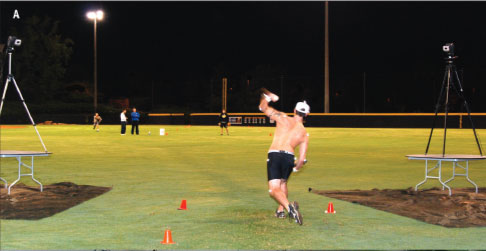
There is a lot of controversy around the glove side to pitching mechanics. Conventional Wisdom would coach the pitcher to pull down or pull around the glove side to launch the throwing arm into action. The problem is this would go against pure speed and classic physics. The reality is that the glove arm to shoulder must act as a fulcrum for the shoulders during the throw to allow for efficient speed mechanics. To understand this we must first define the fulcrum. A fulcrum is the pivot about which a lever turns. The lever in pitching mechanics is the shoulders and also the hips but in this article we are only talking about the shoulders. The shoulders must swing like a door towards the target. Once they open then the arm must launch over the top of the door. If the pivot or fulcrum of the door is moving when the door is slamming closed then the door will not reach its top velocity. The same results would occur with other tools that use the fulcrum or pivot to swing a lever. Good examples similar to pitching, which I have used on this site, would be the catapult or mouse trap. Read more
Does Increasing Arm Strength Increase Velocity?
March 25, 2011
Basic physics teaches us that to throw a ball at your top velocity you must use more than just your arm. You must use the entire kinetic chain, along with every muscle group that will help you reach your top velocity. There are countless articles on this site on how to use more of your body to increase velocity and there is also the revolutionary pitching velocity program called 3X Pitching to coach and train you how to pitch with your total body and increase velocity from 5-10 mph. Outside of this information lets go into more detail on arm strength and velocity.
Arm Strength and Velocity
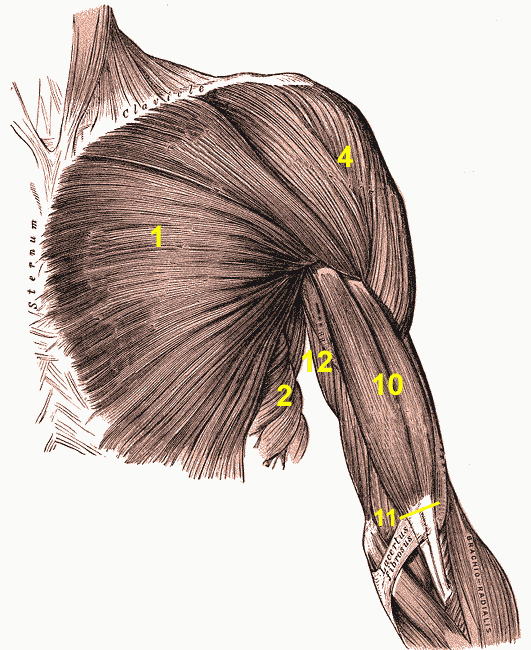
To answer the question, YES, more arm strength will increase velocity but it could prevent you from reaching your potential top velocity. The arm muscles that are responsible for generating arm velocity is the Pectoralis major, Subscapularis, Supraspinatus, Infraspinatus, Teres minor and Latissimus dorsi. Technically these are not arm muscles because they are more apart of the shoulder, but these muscles are responsible for moving the arm. This is one of the problems with using the phrase “arm strength” when talking about throwing velocity. Read more
Why Pitchers Should ICE their Arms?
May 9, 2009
There is a lot of controversy around pitchers and icing their arms post game. After surgery I was very strict when it came to icing post game. I know that it isn’t enough for me here to just say that, “Hey, I did it, so you should too.” So, I took some time to research the web and I found several websites reference the work of Dr. Meeusen from Antwerp, where I played some professional baseball. He based his life study around icing as a means to help heal a damaged muscle. His documentation describes how ice can be effective and where it can cause problems. Read more
The Major Misconception of Pitching
January 30, 2009
Pitching is a very complex sequence of movements that involve building torque and force to generate velocity. So many things happening during a blink of the eye within the pitching delivery. What is even harder than pitching, is explaining this stuff. This is why every coach has his own interpretation. This is also why science wins over conventional wisdom. If you can prove it scientifically then conventional wisdom is forced to listen. If you eliminated ever coach in baseball who could not explain pitching scientifically you would have about 2% of them left to coach the position. This is why so many misconceptions plague baseball today, especially pitching. Read more
How a BAD Pitching Coach Can Ruin a GOOD Pitcher
January 18, 2009
Ultimately your pitching Coach is your boss. If you piss him off, there is a good chance you may be out of a job. The problem is if he is a BAD pitching coach, he could jeopardize your career. It has happened many times before. The key is to keep the Coach happy, while you find the best support you can, to help influence your career.
What makes a BAD pitching Coach?
Someone who has no experience in playing the position at the top levels of the game, or someone who has no certified education of how to coach the position. Read more