

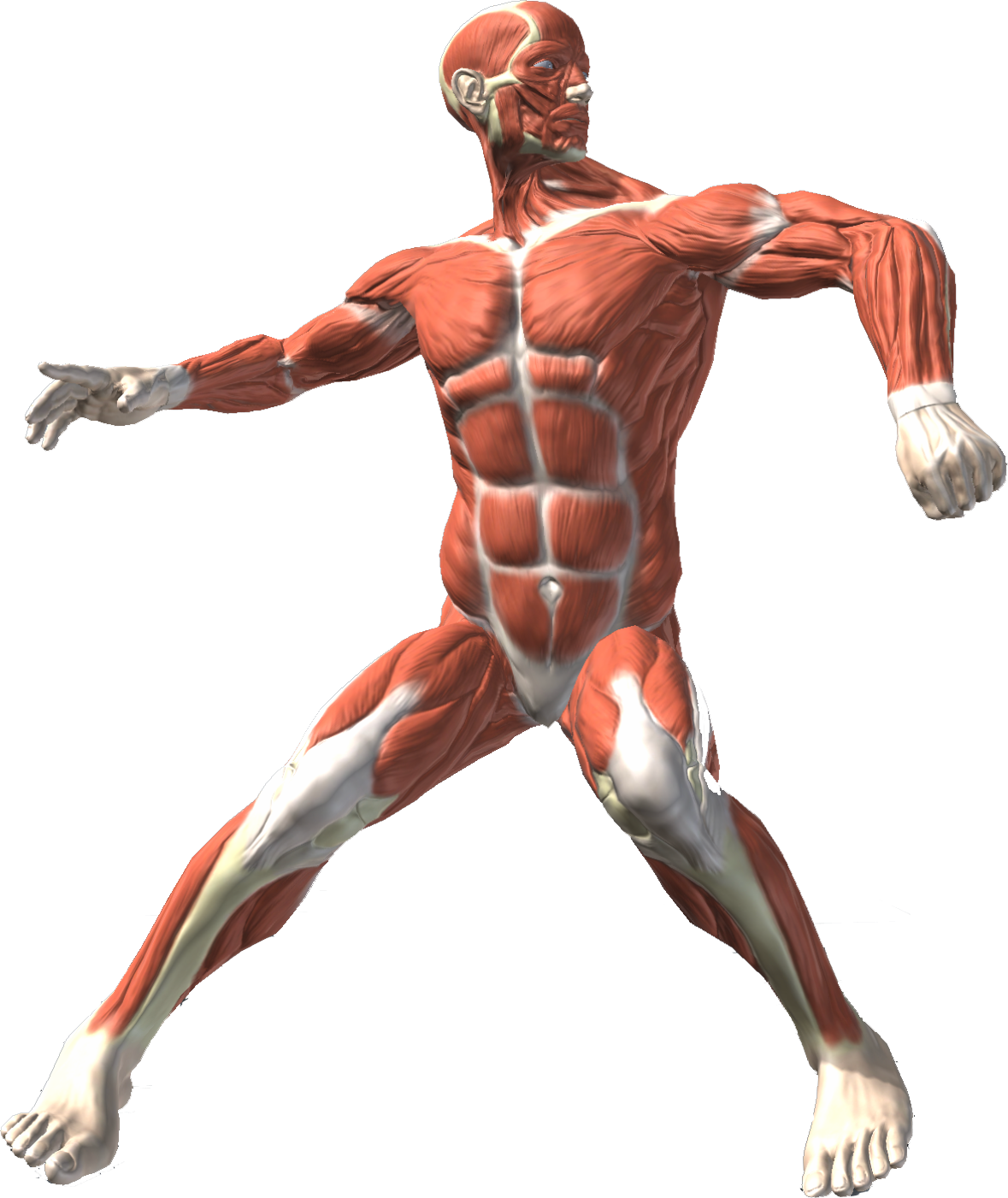
Triple Extension or 3X is the extension of the drive leg ankle, knee and hip flexor. Triple Extending the drive leg as the front side opens, drives the hips completely through to the target. If triple extension occurs quick enough and with enough force at the end of the stride, while the shoulders stay closed and relaxed, this will create optimal hip to shoulder separation.
Many studies have confirmed the correlation of hip to shoulder separation to pitching velocity (1,2,3,4,5). Therefore if you are going to increase velocity, you must learn to increase hip to shoulder separation by learning triple extension (3X) and 3X foot sync. Once you learn how to incorporate full triple extension into your pitching delivery, you will not see its benefits until you master the final factor. The final factor in learning any new muscle memory is the timing factor. The timing factor of 3X is critical to creating 40-60 degrees of hip to shoulder separation which research has shown to be the Major League average.
3X Timing Factor
 The 3X Pitching component before 3X occurs is the "Load" position. This is when your lift leg is coming down into a linear position and your squatting on your drive leg, as your hips begin to build momentum towards the target. The speed of your lower body at this position is moving at a slow pace. You are mainly working to get everything in position for 3X. Most pitchers who do not understand the timing of 3X would try to triple extend quickly while still in the "Load" position. This would prevent good hip to shoulder separation at front foot strike and the pitcher would leap towards his front foot landing instead of driving into front foot strike.
To prevent premature 3X, you must wait for your hips to be as far away from the rubber as possible with your drive leg still bent, linear and ready to fire. Your lift leg is just about ready to land. Now that you know when to fire your drive leg into 3X you must now understand the speed of the movement.
Remember momentum must continue to accelerate to ball release. Therefore if you accelerate too early in your delivery it will cause you to decelerate before ball release. You want the climax of your speed to hit when the ball is launching out of your hand. As for the speed of triple extension, you must start your leg drive after the "Load" position at a slow pace to make sure your drive leg and hip are moving before your back shoulder. Once you feel the separation of back hip to back shoulder begin and your core is starting to tighten then this is when you explode into full triple extension. If you do not feel the separation of hips to shoulders before you triple extend then you could easily triple extend your drive leg and your back shoulder would move along with it, killing your chance of creating optimal hip to shoulder separation. So, once you feel your core tightening, then it is time to fire that drive leg into 3X and push your hips to your target.
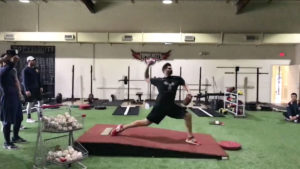 Notice in the image of Cody, here he does not accelerate his lower half and triple extend until he is coming out of the load position and his lift leg is starting to open and land. You will notice that it looks like his knee is driving down into the ground. This is the effect of the extension of the drive leg as the body is moving down hill.
Another indicator that you created good core torque is if you can hear your drive foot dragging before your shoulders and chest start towards the target. This dragging sound should happen just before your chest is thrusting forward. Notice in the image of Cody that his shoulders begin following the hips towards the target just after his drive foot is dragging. Most young pitchers will see in video analysis that their drive foot drag happens after their shoulders commit towards the target.
In conclusion, you will not be able to implement 3X effectively into your pitching delivery and increase pitching velocity until you have mastered the timing factor of 3X into front foot strike.
3X Pitching References
- Tom House, PhD, et al. National Pitching Association Velocity Study conducted 2005-2006.
- Glenn S. Fleisig, James R. Andrews, et al. Comparison Of High Velocity And Low Velocity Pitch Deliveries. ASMI 2007.
- Dave Fortenbaugh, MS, Glenn S. Fleisig, PhD,* and James R. Andrews, MD. Baseball Pitching Biomechanics in Relation to Injury Risk and Performance. Sports Health. 2009 July; 1(4): 314–320.
- Rod Whiteley, University of Sydney, Australia. Baseball throwing mechanics as they relate to pathology and performance – A review. ©Journal of Sports Science and Medicine (2007) 6, 1-20.
- Keizo Takahashi, Norihisa Fujii, and Michiyoshi Ae. Kinematic Comparisons Of Different Pitch Velocity Groups In Baseball Using Motion Model Method. Doctoral Program in Health and Sport Sciences, University of Tsukuba, Japan. Institute of Health and Sport Sciences, University of Tsukuba, Japan.
hey brent, what do u mean slowly coming out of the load into separation?
Your momentum does not peak until you begin to triple extend your drive leg. The "Load" position occurs before this so your momentum is at its slowest point.
The top views of Lincecum and Joba should give those viewing a great lesson on triple extension, sideways body movement and momentum peak to front foot touch down with a stride length of at least matching one's body height, no body rotation up to that point. Lincecum is a little bit farther ahead down the hill, notice each one's rear foot position, Lincecum is about to finish turning his shoe laces to the surface into his toe drag Joba is still in good contact with the rubber, their external arm positions are nearly identical, which clearly shows at this point in each one's delivery, forward body movement that Lincecum holds the ball until the very last second much longer than other pitchers.
In the full pitching movement clip of Joba I like his hip shoulder separation but as I view it he is opening up too soon and too much which is pulling his drive foot up from the rubber too early eliminating his strings to the surface and toe drag, he is aiming his stride leg foot toe and belly button behind the batter at the letter "E" on the Geico sign, nothing there but arm at release point. I would like to view the same clip and be able to step motion it I could better see whether or not I am seeing him slightly shift, "LOAD" his weight to the rear, off center over his drive foot little toe.
If everyone viewing your clips , photo's and explanations would just take time to closely study them especially those you mark such as Lincecums above they could better understand that the full extension of the drive foot, leg and hip Flexors are what triple extension is. To test this one could measure their stride length from the rubber, mark it off place their drive foot to the rubber place their stride foot at their stride length mark in a side ways body position with ball in glove held in front of chest, now take ball out of glove led first by the elbow down back up and around into a complete throwing movement, check drive foot, leg and hip flexors for triple extension during the movement, during the full pitching movement at front foot touch down one must have the arm at the reverse "L" angle position, "w/elbow not below or above shoulder height".
I got carried away here, hope I didn't confuse any one. Hope everyone had "A VERY HAPPY THANKSGIVING WITH MANY MORE TO COME"
Don Ervin
kom_ervin@yahoo.com
should i land with a bent knee? thanks again
and how do you time that reverse ''l'' position in your motion
Yes, land with a bent knee and then as your chest gets out over your front foot continue to stabilize and extend your front leg.
Brooks,
My answer to your question,
Timing the reverse "L" arm position.
"At front foot touch down your arm w/ ball in hand should be in it's vertical, reverse "L" arm launch position opposite the ear," elbow no higher than shoulder, at this position some pitchers will have ball in hand behind their heads or even past the center point of the head to the opposite side ear as is shown in a front view photo I have of of Sandy Koufax."VERY BAD ARM POSITION" which creates a lot of strain,and tension on the shoulder, elbow and arm.
Some people mention an arm hesitation at top of the "reverse "L" position which destroys all of the necessary momentum generated from the ground up by the whole body during the forward movement to the release point and follow through.
From the time the ball is taken from the glove led by the elbow do not hesitate or slow down your controlled momentum which actually begins when one starts down the hill from the rubber to front foot touch down.
View Brent's video clips of Lincecum, time him from the rubber to front foot touch down, also view his reverse"L" arm position at this point, Then time his ball in hand movement from the time the ball leaves his glove to it's catchers glove destination you will view absolutely "no" hesitation, body movement or arm speed slow down to his release point and follow through.
Stand in your side ways body stride position which should match your body height, you may want to go a bit shorter at first then place your arm in it's "reverse" "L" launch position w/ball facing catchers glove, elbow no higher than shoulder height this should give you the feel and idea of the proper arm position at front foot touch down and should get your timing in sync.
Don Ervin
kom_ervin@yahoo.com
Brent after reading this article i am still confused about the timing of triple extension like do you triple extend when you are loaded to the fullest, when your force vector is in line, when your head is behind your drive leg . Every time I am pitching i am always triple extend up and to early and it feels like i am triple extending at the last second and that i can't go out any farther. How am I supposed to hold this until the last second or is there an easy indication or sign of when I am supposed to fire and triple extend . Like I am good at moving forward and getting my force vector in line but I don't know what you mean or I kind of know what you mean by holding everything back until triple extension do you mean hold my head behind my drive leg then triple extend. When I try to move my hips forward i literally throw them or lung them towards the target when i do this my force vector gets in line that's a good thing but after i do this i my load looks awkward and it looks like i don't load enough and i don't know what to do after this so I just triple extend. So i need to know what to do in the lift leg cause I am kind of confused about that and how to get into an easy load position and then once i hit the load position where do I go from there like for example do i keep holding the load and triple extend. I need an easy answer to all of my questions so i can go to the baseball field video camera myself and fix this. Sorry for the long question i am just really confused i have been reading all of the articles to try and understand this.
This is why you need to complete the 3X Velocity System in the Ace Pitcher Handbook. It is all about torque. Everyone is different. You need to work to find your perfect timing based on your bodies size and development. You need to practice with the med throws until you discover your perfect timing of 3X. If your focus is using 3X to generate more core torque then you will know when you have accomplished your perfect timing because you would have experienced the desired result. This is why I developed the med throws in the 3X Velocity system so you could use the high volume of med throws to discover the 3X mechanics and timing without putting the stress on the arm.
brent, how many degrees of separation do you think sergio romo is getting in this picture? like 20? I feel like this is only a little bit more than I am at now in terms of degrees of separation. romo throws 87-90 mph, so he must have some linear power. http://www.zimbio.com/pictures/wwbHxpG2zo8/Los+Angeles+Dodgers+v+San+Francisco+Giants/LcHGXyXI1mt/Sergio+Romo
This is a tough angle to measure separation. You need to always find something from the side.
Is there anyway to send you a video so you can see what’s happening? At 86 trying to get to 90 in rising senior recruiting summer.