Torque Pitching Articles | Baseball
Subscribe to me on YouTubepitching velocity videos


Subscribe to iTunes Pitching


torque Pitching Articles

Pitching Articles, Baseball Pitching Articles, Pitching Velocity Articles

Here are some pitching articles on this important pitching velocity topic. This topic is currently open for discussion. You can either comment on the articles below or start a thread in the pitching forums.

Dorsiflexion Is The Key To The Pitching Power Of 3X

Brent Pourciau

by Brent Pourciau · May 22, 2012

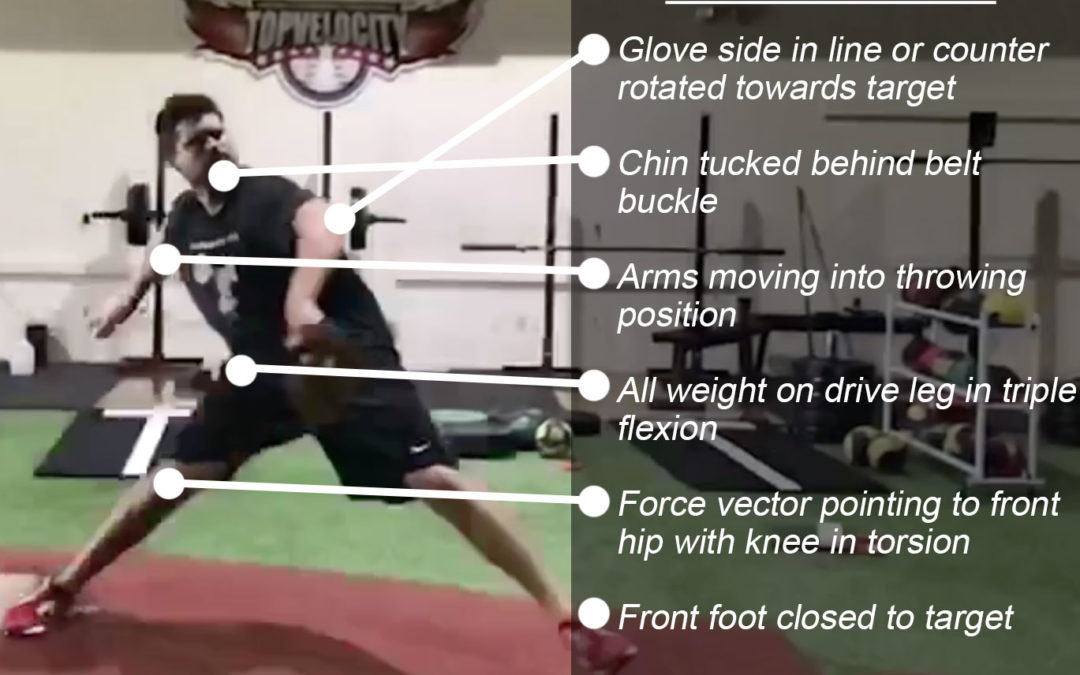
Dorsiflexion Power Pitching3X Pitching is a revolutionary approach to increase pitching velocity which holds the secrets to power pitching. The foundation of the approach is using triple extension (3X) of the drive leg to enhance hip to shoulder separation and pitching velocity. You can learn more about the science behind this power pitching approach in my latest article called, Scientific Proof that 3X is Key to Separation and Pitching Velocity.

In another article here at TopVelocity.net, I defined a critical component to implementing 3X which is called the ankle kick. You can learn more about the ankle kick and it’s role in the 3X Pitching mechanics in the article called, 3X Pitching and the Critical Ankle Kick. Once a pitcher has learned the power of the ankle kick to the 3X approach to pitching and has used the 3X Velocity System (throwing program) to implement the motor coordination around the 3X Pitching mechanics then it is important to begin working on the fine motor skills of 3X Pitching to help the pitcher master the entire approach and have a significant increase on pitching velocity. Read more

Hard Throwers Land Hard At Front Foot

Brent Pourciau

by Brent Pourciau · May 10, 2012

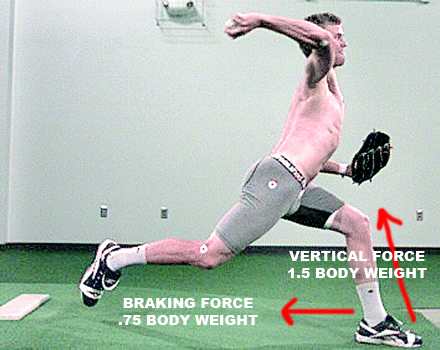
Hard Throwers Land Hard at Front FootThe moment of front foot strike in the power pitching delivery is critical, this is when power is converted into torque. The more power a pitcher can generate at front foot strike then the more potential to generate high amounts of torque in the elastic muscles of the body. There has been a lot of controversy around this topic and it is time to set the record straight.

Many conventional coaches would coach a soft landing at front foot strike and many of these coaches would be reducing a pitchers ability to build torque and increase pitching velocity. The science today now proves that high velocity pitchers apply more force into the ground at front foot strike than low velocity pitchers. Let’s look at this science along with some “Big” League high velocity pitchers, so we can learn how to benefit from this cutting edge information.
Read more

Top 10 Pitching Velocity Workouts

Brent Pourciau

by Brent Pourciau · February 8, 2012

Pitching Velocity Workouts, Exercises, LiftsSo you need velocity and you need it now! I get it. I was you. This is why I put together the top 10 pitching velocity workouts here so you don’t have to continue searching through all the junk online to actually find something that works.

Yes, I am going to give you years and years of knowledge in this article for FREE! Why would I do this? Because once you read these top 10 pitching velocity workouts, you are going to learn that there is no better website out there when it comes to developing pitching velocity and maybe just maybe, you will trust me enough to become a member of 3X Pitching.

Before I list these top 10 pitching velocity workouts, I am going to first give you proof that strength training increases pitching velocity then I am going to show you why these workouts will work. To understand why these workouts are so effective and has been the secrets to helping many top level college and professional pitchers make it in their careers, I need to first show you the science that proves it and then give you a quick summary of how pitching velocity is enhanced. Read more

The Perfect Pitching Placement Of Front Foot Strike

Brent Pourciau

by Brent Pourciau · November 1, 2011

The Perfect Pitching Placement of Front Foot StrikeFront foot strike is the single most important moment in the pitching delivery because this is the moment that stride power is converted into hip and shoulder separation and is guided to its pitching location. Therefore perfect placement at front foot strike is necessary to not only support pitch location but to also support high velocity.

The problem with over coaching front foot strike is that all of the power production that must occur before front foot strike is forgotten. This will develop an accurate pitcher but if the pitcher struggles with power issues then he will be a low velocity accurate pitcher with a higher chance of having arm problems. Unfortunately, this is not going to get him to the next level.

The key to coaching front foot strike is to first coach the power stride before you move into front foot strike. If the pitcher has done his job and conquered his power issues and has developed an explosive stride then front foot strike becomes critical in converting this power into torque. Read more

3X Pitching Superior To Extreme Long Toss

Brent Pourciau

by Brent Pourciau · May 21, 2011

3X Pitching VS Long TossThe argument behind extreme long toss is that the pitcher will learn how to take the throwing velocity of a 300 foot flat ground throw and transfer it into a 60 foot pitch off of a mound. This is what I learned from watching an interview with Alan Jaeger, who uses extreme long toss with yoga to develop pitchers.

If you have been following this site then you know that I am totally against this approach to developing the pitcher. Here is a quick summary of why I am against this type of training. The American Sports Medicine Institute (ASMI) proves in their latest case study here that this type of long toss creates elbow varus torque in the arm and uses different mechanics than those used on the mound. In defense, Alan Jaeger says that the athletics of the 300 foot flat ground throw when restricted to 60 feet, through his “Pull Down” phase, forces the pitcher to be more open and explosive. Read more

Do Speed Chains Help Baseball Pitchers?

Brent Pourciau

by Brent Pourciau · April 19, 2011

Do Speed Chains Help Baseball PitcherI get this question a lot because of the latest training gimmick that is showing up online called “Speed Chains.” When I search the web for these velocity training aids I feel like it is 3 in the morning and I am watching infomercials.

The first thing that always comes to my mind is, “Who buys this stuff?” It goes all the way back to the “Thighmaster” in the 90′s. These gimmicks are offering a simple and easier alternative to a complete training program but it hardly gives you the same results. The biggest problem is the gimmicks are using one tool to act as a universal training device. I can understand why a couch potato would buy a “Thighmaster” but I can not understand why a young pitcher who wants to become and elite athlete/pitching would use a gimmick like these “Speed Chains” as their alternative to a complete training program. I could see using “Speed Chains” as a small part of a complete training program but not as the entire thing. Read more

Pitching Velocity Quick Tip #3

Brent Pourciau

by Brent Pourciau · October 24, 2010

This Velocity Quick Tip focuses on the lift leg and how it can work against you when trying to build core torque. Core Torque is critical to reaching your top velocity. This video will show you how to use the lift leg to help you generate more core torque or hip to shoulder separation.

To learn more about the problems and benefits of the lift leg read the article Lift for Show Load for Doe.

These tips all are covered in depth in the Ace Pitcher Handbook and the 3X Velocity Camp Instruction Videos. If you are looking for velocity drills to help you become more total body in your pitching mechanics then you must consider purchasing this information.

If you have any questions please post your comments below.

Pitching Velocity Quick Tip #2

Brent Pourciau

by Brent Pourciau · October 3, 2010

This is the second velocity quick tip of the velocity quick tip series.

This quick tip covers the “Tilt” and how it is a key component to pitchers like Tim Lincecum’s total body mechanics. This tip will help support good hip to shoulder separation. It uses gravity to build more core torque at front foot strike. It is important though that you maintain balance when implementing the “Tilt” into your delivery.

Here is the article I wrote on Tim Lincecum and the Tilt to learn more about the effects of this key component of velocity.

These tips all are covered in depth in the Ace Pitcher Handbook and the 3X Velocity Camp Instruction Videos. If you are looking for velocity drills to help you become more total body in your pitching mechanics then you must consider purchasing this information.

If you have any questions please post your comments below.

Band Separation Pitching Drill

Brent Pourciau

by Brent Pourciau · January 10, 2010

The main purpose of a Drill, is to practice a component of the delivery that will help to correct a mechanical flaw. I also believe it is important to add resistance to a drill to help imprint the new muscle memory.

The drill below should be performed 2 – 3 days a week, for at least 3 – 4 months. The drill should also be performed after completing the “Flexibility Training” portion of the Fusion System which can be found in the Ace Pitcher Handbook. You can also find more drills in the handbook. Try to push each drill to muscle fatigue, if possible. Read more

The Phenomenon Of Speed Mechanics!

Brent Pourciau

by Brent Pourciau · January 9, 2010

We have all heard about the importance of momentum in pitching but do we really know what it means and how it works? Pitching velocity is a product of momentum and rotational torque. I believe that top velocity is achieved when both momentum and rotational torque meet. The problem is we all understand rotational forces when throwing but momentum seems to be a lot harder to truly understand and implement into our deliveries. To truly understand momentum, I have coined a new term, along with its description. Read more

The Pitching Key To Torque Is In The “Tilt”

Brent Pourciau

by Brent Pourciau · November 18, 2009

Tim Lincecum Tilt PitchingOne of the main reasons a pitcher the size of Tim Lincecum, can generate as much pitching velocity as a pitcher as tall as Randy Johnson, is because of core torque. The key to Tim Lincecum’s ability to create optimal torque is in his release point.

Tim has an “Over the top” release point and Randy has a “Sidearm” release point. I am not saying that every pitcher should throw the ball with a higher release point the shorter they are because there are benefits with all arm angles. What I am saying is a higher release point, using total body mechanics, will generate more core torque and in return increase pitching velocity if done correctly. Read more

Comparison Of High Velocity And Low Velocity Pitch Deliveries

Brent Pourciau

by Brent Pourciau · June 18, 2009

Baseball ResearchStodden DF, Fleisig GS, McLean SP, Lyman SL, Andrews JR. Relationship of pelvis and upper torso kinematics to pitched baseball velocity. Journal of Applied Biomechanics 17(2):164-172, 2001.

Matsuo T, Escamilla RF, Fleisig GS, Barrentine SW, Andrews JF. Comparison of kinematic and temporal parameters between different pitch velocity groups. Journal of Applied Biomechanics 17(1): 1-13, 2001.

Stodden, DF, Fleisig, GS, McLean, SP, Andrews, JR. Relationship of Biomechanical Factors to Basebal Pitching Velocity: Within Pitcher Variation. Journal of Applied Biomechanics 21(1): 44-56, 2005 Read more

What Is Momentum Pitching?

Brent Pourciau

by Brent Pourciau · June 14, 2009

Momentum PitchingThe online world of pitching experts have been throwing around the buzz word “Momentum pitching” recently. This isn’t anything new unless you are up to date on the breakthroughs of pitching science. Pitchers have been trying to find better ways to generate more momentum in their deliveries for years but what is changing is the science behind this matter.

During the prime of the likes of Nolan Ryan, the popular way of generating more momentum back then was the “Stand Tall and Fall” style developed by Nolan Ryan and his pitching coach Tom House, who may have coined the term. This proceeded the popular style of “Drop and Drive” used by the great Tom Seaver. These two styles of pitching are still used today. What is changing is pitching mechanics are evolving from an art form into the world of science. Read more

Separation And Triple Extension

Brent Pourciau

by Brent Pourciau · June 6, 2009

This videos covers the importance of “Separation” which builds core torque, increases velocity and takes stress off of the arm. Brent Pourciau also talks about how “Triple Extension” and the “Load” position is the key to generating optimal “Separation. Read more

Triple Extension Pitching Creates Optimal Separation

Brent Pourciau

by Brent Pourciau · June 6, 2009

Triple Extension, Hip to Shoulder SeparationFor all of those pitchers who are trying to develop more separation in back hip to back shoulder, you will only achieve this with explosive triple extension of the drive leg. “Triple Extension” is the extension of the ankle joint, knee joint and the hip flexor. You must perform this in your drive leg so your back hip can open completely to the target. If you keep your shoulders and weight back while aligning your Force Vector and once your Force Vector is linear you perform”Triple Extension,” optimal “Separation” will occur. Read more

Tim Lincecum Teaches Top Velocity

Brent Pourciau

by Brent Pourciau · May 5, 2009

There are two forces that add velocity to a pitch:

  1. Momentum
  2. Rotational Torque

For momentum to effectively transfer to the ball, the pitcher must use all rotational pivots in order from the bottom up.  The hips must rotate before the shoulders and the shoulders before the arm internally rotates. For this to happen effectively these pivots must be free to rotate completely. Notice the picture of Tim Lincecum at the bottom of the page (Tim Lincecum is a phenom because of his size and ability to reach his top velocity continuously.)  Notice in the picture his weight is slightly leaning to his left. This would be like tilting an open door backwards so the open door slams closed due to gravitational forces. This gravitational pull is helping to create full range of motion in Tim Lincecum’s hips and shoulders at front foot strike. If he or the door was tilted the opposite way then these gravitational forces would work against his momentum by decreasing full range of motion in his rotational pivots. Using the force of gravity to increase the range of motion in your hips and shoulders will have a significant effect on your velocity. This is a big reason why Tim Lincecum can throw so hard for his size. He is working with the forces of nature to generate his power. Read more

The Split Perspective Of Separation

Brent Pourciau

by Brent Pourciau · February 17, 2009

Separation PitchingSeparation is a major component to developing top velocity and longevity. Separation means having separation from your back hip to back shoulder at front foot strike. Notice the picture here of Felix Hernandez. His back hip is pointing towards home plate and his back shoulder is pointing towards second base. This creates torque in the core. You can see the stretching in his jersey around the stomach area. Having more torque in the core instead of the shoulder of the arm will lead to more velocity and a healthier arm. Read more

The Hip Slide To Pitching Velocity

Brent Pourciau

by Brent Pourciau · February 12, 2009

Hip Slide PitchingThe biggest problem I find in young pitchers is that they have poor separation in their hips to shoulders. There are many articles on this site covering the pitching component “Separation.” It is so important because having separation from your back hip to back shoulder before the shoulders rotate to the plate, is critical for velocity and the health of your arm. What “Separation” does is it builds core torque. It puts more torque in the big muscle groups of the core, instead of mainly in the small muscle groups of the shoulder. Read more

The Major Misconception Of Pitching

Brent Pourciau

by Brent Pourciau · January 30, 2009

Pitching MisconceptionsPitching is a very complex sequence of movements that involve building torque and force to generate velocity. So many things happening during a blink of the eye within the pitching delivery. What is even harder than pitching, is explaining this stuff. This is why every coach has his own interpretation. This is also why science wins over conventional wisdom. If you can prove it scientifically then conventional wisdom is forced to listen. If you eliminated ever coach in baseball who could not explain pitching scientifically, you would have about 2% of them left to coach the position. This is why so many misconceptions plague baseball today, especially pitching. Read more

How A BAD Pitching Coach Can Ruin A GOOD Pitcher

Brent Pourciau

by Brent Pourciau · January 18, 2009

BAD Pitching CoachUltimately, your pitching Coach is your boss. If you piss him off, there is a good chance you may be out of a job. The problem is if he is a BAD pitching coach, he could jeopardize your career. It has happened many times before. The key is to keep the Coach happy, while you find the best support you can, to help influence your career.

What makes a BAD pitching Coach?

Someone who has no experience in playing the position at the top levels of the game, or someone who has no certified education of how to coach the position. Read more