
NCSA's published D3 pitching velocity guidance is 77–82 mph for its combined Division 3/NAIA pitcher category. That is not a measured national D3 average, an upper limit or a universal recruiting cutoff. We have not verified a representative dataset establishing the average velocity of all D3 pitchers. Use the NCSA recruiting guidelines as an attributed reference—not a verdict on whether you can play college baseball.
Updated September 15, 2026 · Recruiting sources and examples reviewed.
For a high-school pitcher or parent, the useful question is more specific: what does your fastball look like across comparable pitches, and what evidence accompanies the number? Start there before deciding that one radar reading makes you ready—or rules you out.
D3 pitching velocity: recruiting guidance versus an average
The table below reports one provider's published guidance, checked September 15, 2026. These are not measurements from a nationwide sample of college pitchers.
| Source category | Published velocity guidance |
|---|---|
| Division 3 and NAIA, grouped | 77–82 mph |
| Division 2 | 82–90+ mph |
| Division 1 | 84 mph consistently; extending to 95+ mph |
| Junior college | 80 mph consistently |
NCSA explains that its guidelines have exceptions. Its combined D3/NAIA category also considers off-speed pitch control and development. Do not split that grouped category into two supposed averages or treat 82 mph as a ceiling.
Typical velocity versus peak: what your readings actually show
For example, “I throw 87” leaves important information out. Was 87 your fastest fastball once, your average across an outing, or a running throw rather than a pitch? Instead of letting the listener guess, report what was measured.
Illustration only: the following five readings are invented to explain the arithmetic. They are not a TopVelocity athlete's results, a D3 benchmark or a recommended testing workload.
| Measure | Result | Meaning |
|---|---|---|
| Readings | 84, 85, 85, 86, 87 mph | All five values in this example |
| Mean | 85.4 mph | 427 divided by 5 |
| Median | 85 mph | The middle value when ordered |
| Peak | 87 mph | The highest recorded value |
| Range | 84–87 mph | Lowest through highest |
| Sample count | 5 pitches | The number of readings summarized |
A precise summary would be: “These five fastballs ranged from 84 to 87 mph, averaging 85.4.” However, five readings do not establish recruiting readiness or a season-long sitting velocity. Keep game and bullpen records separate, and define what you mean by “sitting” rather than using it as another word for your best pitch.
Build a D3 pitching velocity profile you can compare
Use records from your existing, appropriately supervised throwing activity. Do not add max-effort throws just to fill a tracking sheet. For each record, keep these details together:
- Pitch type and setting: fastball, game or bullpen, mound distance, and whether there was a batter. Keep breaking balls, changeups and running throws out of the fastball summary.
- Measurement setup: device model, units, placement and operator. Mark unknown details as unknown; do not silently assume two devices or setups are interchangeable.
- Date and sample: the session date, number of recorded pitches, mean, peak and full range. Retain the individual readings so the summary can be checked.
- Pitching context: video, pitch locations and available game statistics. Include the innings or opportunities behind statistics instead of reporting a percentage without its sample.
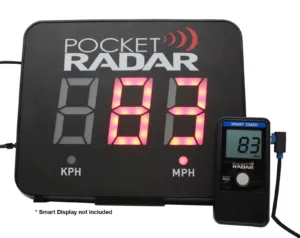
Setup can also affect the number itself. Pocket Radar's manufacturer guidance explains that measuring off the ball's line of travel can produce a lower reading. Therefore, follow your device's instructions and use consistent placement before interpreting a small difference as development or decline.
Turn the comparison into a development decision
Next, separate your recruiting record from your training plan. The record describes what happened. In contrast, the plan should identify what you are working on, how it fits your existing throwing and competition schedule, and how progress will be reviewed.
Review the evidence with your current coach: are comparable fastball readings changing, are intended locations being reached, and is a secondary pitch becoming more usable? A rising peak with unchanged game performance calls for a different conversation than a misleading comparison between two radar setups.
For parents, keep the discussion specific: “What do these records show?” is more useful than “Why aren't you at the next division's number?” Avoid turning a provider's range into an urgent deadline or stacking extra throwing on top of an existing plan. For younger players, our pitching velocity by age guide provides additional context; age comparisons are not college recruiting decisions.
D3 pitching velocity questions
Can an 80-mph pitcher play college baseball?
An 80-mph reading alone cannot establish whether a particular college will recruit you. Instead, present the measured velocity in context, alongside your pitching record and academic information, and evaluate specific programs. Being within a published range does not guarantee a roster place.
Do coaches look at sitting velocity or top velocity?
Provide both, clearly defined, rather than assume every coach uses the same screening method. Show the full recorded range and sample behind your typical figure; label the fastest reading as a peak. A peak-only clip cannot establish what you sustain across an outing.
How much velocity do I need to add for D3?
There is no defensible personalized mph target in this table. Set development priorities from your actual pitching evidence and the programs you are considering—not by subtracting your peak from someone else's guideline. An article cannot promise a recruiting outcome or predict your rate of improvement.
Choose your next TopVelocity training step

If you want an in-person starting point, review the current 3X Velocity Camp options, dates and registration details. Prefer to train remotely? Compare the online Player Platform plans and current inclusions. Choose the format that fits your schedule and training environment.