

Calculate Average Pitch Speed in MPH
Enter the ball's travel distance in feet and the elapsed time in seconds for the same part of the pitch. This estimates average speed over that interval, not a radar measurement of speed at release. If you time release to glove, measure release to glove—not automatically rubber to plate.
Use positive values and match the start and end points of your distance and timing.
Formula: average speed (mph) = distance (feet) ÷ time (seconds) × (3600 ÷ 5280).
Worked example: 55 feet ÷ 0.45 seconds × (3600 ÷ 5280) = approximately 83.3 mph. The 55-foot distance is an example, not a standard release-to-glove distance.
Looking for a Velocity Potential Estimate?
The TopVelocity.org Velocity Calculator is a separate tool that uses your athletic profile and current velocity to produce a modeled estimate. That estimate is not a measured pitch speed or a guarantee of future gains.
 Estimate pitch speed from video, then interpret the result with the right measurement context.
This guide explains how to use a video-analysis tool such as Dartfish to identify ball release and glove contact, calculate the elapsed time, and estimate average pitch speed. The key is matching the distance you enter to the exact interval you time.
How the Pitching Velocity Calculator Works
The calculator divides distance by elapsed time and converts feet per second to miles per hour. Its output is an estimate of average speed over the measured interval. It does not measure release speed, spin, movement, command, or future velocity potential.
- The Pitching Velocity Calculator's Operation: Use the ball's measured travel distance and the elapsed time for matching endpoints. Enter feet and seconds; the calculator converts the result to mph. Accuracy depends on the distance estimate and video timing.
- Why is the Pitching Velocity Calculator Important in Your Game? It is critical to understand your pitching velocity. It not only assists you in understanding the strength and pace of your pitch, but it also contributes to the development of strategic plays. You may anticipate how the batter will react by studying the speed of your tosses, giving you an advantage in the game.
Dartfish - Your Baseball Analysis Secret Weapon
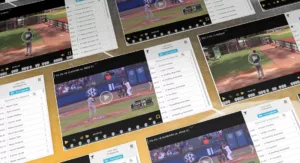 To utilize the Pitching Velocity Calculator efficiently, you must have precise timing data. Dartfish comes into play here. You can use this video analysis software to film your pitch and time how long it takes the ball to go from your hand to the catcher's glove.
- Dartfish Software - A Quick Overview: Dartfish is a video analysis tool that is utilized by elite athletes and coaches all around the world. It enables you to record and evaluate video footage of your performance. Slow-motion replay, frame-by-frame analysis, and sophisticated tagging capabilities make it an indispensable tool for serious baseball players. Explore Dartfish video analysis
- How Dartfish Can Assist You in Measuring Pitching Time: Dartfish measures the precise time it takes for your pitch to reach the catcher's glove using powerful slow-motion and frame-by-frame analytic tools. You can then enter this information into the Pitching Velocity Calculator to get your pitch speed.
How to Use Dartfish to Track Pitching Time
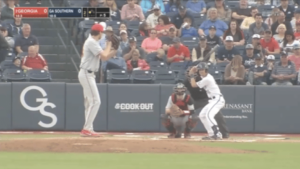 Here's how to use Dartfish to record your pitching time, which is essential for estimating your pitching velocity.
- Get Your Video Recording Ready: To begin, make sure that the complete pitching route is visible in the camera frame, from the pitcher's mound to home plate. Place the camera at a height that allows you to see the entire trajectory of the pitch.
- Capture Your Pitch: When everything is in place, record your pitch. Make sure you can see the release point and the catcher's glove. Keep in mind that the higher the quality of the video, the more precise your time and velocity calculations will be.
- Use Dartfish to Analyze Your Pitch: After you've recorded your pitch, post it to Dartfish. You can examine your pitch frame by frame with the software's analytic capabilities to pinpoint the exact moment of release and the instant the ball lands in the catcher's glove.
- Determine Your Pitch Time: Once you've discovered these two critical spots, use Dartfish's timestamp tool to calculate how long it took your pitch to go from your hand to the catcher's glove. This time information will be entered into the Pitching Velocity Calculator.
Which Distance and Time Should You Enter?
Use matching endpoints before calculating speed. For release-to-glove timing, enter the corresponding release-to-glove travel distance. The regulation rubber-to-plate distance is 60 feet 6 inches (60.5 feet), not 60.6 feet. MLB's extension definition explains why the release point is closer to the plate than the rubber.
- Enter your information into the Pitching Velocity Calculator: Enter the ball's travel distance in feet and its elapsed time in seconds for the same interval. Do not combine rubber-to-plate distance with release-to-glove timing. If the release point, glove contact, or distance is unclear, treat the result as a rough estimate.
- Allow the Calculator to Do Its Work: The result is average speed across the timed interval. Record your measurement method alongside the estimate so future comparisons use the same setup.
What Does Your Pitching Velocity Mean in Your Results?
Average flight speed is not release speed. Baseball Savant documents Statcast pitch velocity as out-of-hand speed. This calculator instead averages speed across your timed interval. Do not treat the two readings as interchangeable. For broader context, explore our pitching velocity by age and pitch type guide; an age comparison is not an individual training prescription.
- Pitching Velocity's Effect on Your Game: High pitching velocity not only intimidates batters; it also shortens their response time, making it more difficult for them to hit your pitches. As a result, a faster pitching velocity can typically result in more strikeouts and fewer successful hits against you.
- Improving Your Game by Increasing Your Pitching Velocity: Knowing your pitching velocity allows you to set attainable, measurable targets for growth. Whether you're working on your physical strength or modifying your technique to add additional speed, your pitching velocity serves as a barometer for your development.
FAQ
- What exactly is the Pitching Velocity Calculator? It estimates average pitch speed from the distance and time you enter. Use feet and seconds for the same interval of ball travel; it is not a radar measurement or a prediction of future velocity.
- How can Dartfish assist in determining pitching velocity? Dartfish is a video analysis tool that can calculate the time it takes your pitch from release point to catcher's glove. This time measurement is critical in determining pitching velocity.
- What can I do to increase my pitching velocity? Strength training, technique improvement, and regular practice are all part of improving your pitching velocity. The first step toward improvement is to understand your current pitching velocity.
- Is a faster pitching velocity always preferable? While a fast pitch might make it tough for batters to hit, it is not the sole aspect in a good delivery. Accuracy, technique, and plan are other important factors in pitching success.
- Is there always the same distance between the pitcher's mound and home plate? Regulation rubber-to-plate distance is 60 feet 6 inches (60.5 feet). Other field dimensions can differ. For this calculator, the relevant distance is the ball's travel over your timed interval—not automatically the field's rubber-to-plate dimension.
- Can the Pitching Velocity Calculator be used for other sports? Yes, as long as you have the distance and time data, you may use the Pitching Velocity Calculator for any sport that involves throwing or pitching.
Understanding your pitching velocity and how to increase it may make or break your baseball game. You may delve deeper into your performance, refine your abilities, and unlock your full pitching potential by using tools like Dartfish and the Pitching Velocity Calculator. Remember that information is power in baseball. So, take advantage of the strength of these tools and boost your game!
Choose Your Next Training Step
Ready to move from measuring to structured training? Compare 3X Velocity Camps, including the two-day in-person camp in Covington, Louisiana and the online camp option.
For ongoing app-based training without enrolling in a camp, explore the Player Platform's programs, video analysis, and progress tracking. Explore App-Based Training →