
A building full of cages is not yet a baseball academy. To start a baseball academy, first define the athletes you will serve, verify local demand, plan a workable facility and budget, prepare qualified staff, and establish how players will be evaluated, trained and supported. The building should fit that plan—not dictate it.
Whether you are opening a new location or expanding an existing business, use the checklist and blank worksheets below to turn assumptions into decisions. Start with what your staff can deliver consistently before adding more services.
Already have athletes, staff and training space? Compare current TopVelocity organization plans while you evaluate the development system. Budget for the business itself separately.
Checklist to Start a Baseball Academy
Complete these planning outputs before advertising a launch date. Mark unresolved items instead of treating missing information as approval.
| Decision | Planning output | Ready? |
|---|---|---|
| First audience and offer | Defined athletes, service mix and evidence of local demand | ☐ |
| Suitable training space | Site questions resolved with the relevant professionals | ☐ |
| Startup and operating budget | Dated quotes, recurring expenses and cash-reserve assumptions | ☐ |
| Staff and space capacity | A sample week without conflicting resource commitments | ☐ |
| Player-development process | Responsibilities for evaluations, assignments and progress review | ☐ |
| Launch readiness | Current terms, prepared staff and a tested customer journey | ☐ |
1. Validate Local Demand Before Choosing Your Facility

The U.S. Small Business Administration recommends examining demand, market size, location, market saturation and pricing when researching a business. These questions are more useful than assuming baseball's popularity will fill your academy. SBA business-planning guidance
Define your first customer group precisely: families seeking pitching instruction, teams needing coordinated development, hitters seeking regular training, or another group your staff can serve. Separate interest in your coaching from willingness to buy a particular program at a particular time.
Record what prospective customers currently use, what they believe is missing, their available training times and the alternatives nearby. Compare competing offers on instruction, access, scheduling and how development is communicated—not just price.
Map school schedules, tournaments and weather against your proposed calendar. An attractive offseason schedule may conflict with team practices during the season. Use those findings to define a manageable first offer rather than launching every possible service.
2. Match the Space to the Training You Will Deliver
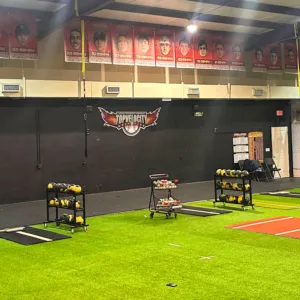
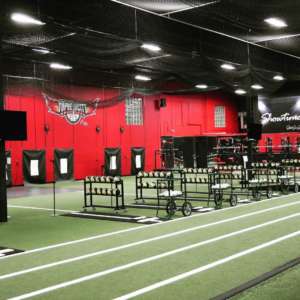
Compare shared space, an existing facility and a dedicated location against the same program requirements. A lower advertised rent is not automatically a better fit if the space cannot support your intended activities or requires substantial changes.
Before committing, document questions for the landlord, qualified designer, insurer and appropriate local authorities:
- Is the intended use suitable for this site, and what approvals need verification?
- Can the layout separate throwing, hitting, strength work and people moving through the building?
- Where will check-in, storage, equipment, observation and staff work occur?
- What access, utilities, accessibility and insurance matters must be resolved?
- Who is responsible for installation, maintenance and any required improvements?
Build equipment requirements from your actual program. List what each activity needs, what you already own and what requires inspection or a quote. Do not buy technology simply because another facility displays it.
3. Build a Quote-Based Startup Budget
The SBA distinguishes one-time expenses from monthly expenses and recommends identifying costs before launching. A platform subscription belongs in that wider financial picture; it does not replace the cost of space, staffing or equipment. SBA startup-cost guidance
Copy this worksheet and fill it with local quotes. Enter unknown when information is missing and not applicable only after checking. Record quantities, installation, shipping, taxes and exclusions in the notes where relevant.
| Cost item | Quote source/date | Cash due before opening | Recurring expense/period | Notes or unknowns |
|---|---|---|---|---|
| Space, deposits and improvements | ____ | ____ | ____ | ____ |
| Cages, netting, turf and mounds | ____ | ____ | ____ | ____ |
| Strength and evaluation equipment | ____ | ____ | ____ | ____ |
| Staffing and preparation | ____ | ____ | ____ | ____ |
| Insurance and professional services | ____ | ____ | ____ | ____ |
| Software and payment processing | ____ | ____ | ____ | ____ |
| Utilities, maintenance and marketing | ____ | ____ | ____ | ____ |
Track refundable deposits separately from expenses. Show a cash-reserve assumption explicitly, but do not count the same operating expense twice when combining startup funding and an expense forecast. Review uncertain accounting treatment with your accountant.
If you are expanding an existing academy, distinguish expenses you already carry from additional costs created by the new program. Compare plans using the same operating period. For more on comparing provider charges, use the baseball training business cost guide.
4. Test Staff and Space Capacity Before Forecasting Sales
Build a sample operating week before deciding how many memberships to sell. Identify the coach and training area needed for every offer, including setup, changeover, assessment recording and cleanup.
Use this blank schedule for planning—not as a safety standard. Determine supervision and activity limits with qualified staff and the relevant requirements for your setting.
| Day/time block | Program and duration, including changeover | Coach and assigned area | Planned attendance; supervision check |
|---|---|---|---|
| ____ | ____ | ____ | ____ |
| ____ | ____ | ____ | ____ |
| ____ | ____ | ____ | ____ |
| ____ | ____ | ____ | ____ |
Check each row against the others: has one coach been assigned to overlapping sessions? Is a team rental occupying the area promised to a training group? Who records evaluations while another session begins? Revise the timetable before treating every available hour as sellable capacity.
Before selling a membership, state exactly what the family buys: coached sessions, facility access, evaluations, between-visit assignments and progress updates. Record the booking rules and any separate charges. Then check that the schedule can deliver those inclusions. An offer that sounds clear on a sales page still needs available staff and space behind it.
Revenue is not profit. A forecast must account for expenses, and available capacity does not establish paid enrollment. Avoid counting the same athlete's membership access again as separate lesson revenue unless those purchases are genuinely distinct.
5. Establish a Repeatable Player-Development Workflow
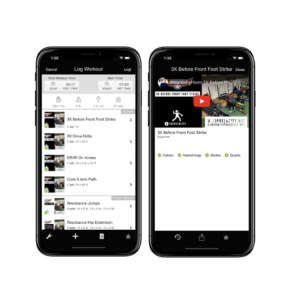
Write down how an athlete moves through the academy. A practical sequence is registration, baseline evaluation, training assignment, completion tracking and progress review. Name the staff role responsible for each handoff and specify what information must accompany it.
Record assessment conditions so staff can interpret later comparisons. Decide how missed sessions, incomplete work and changed training needs are handled. Give families clear expectations about communication and progress reporting without promising a particular velocity gain or recruiting outcome.
When evaluating software, follow one sample athlete through the entire workflow. Check permissions, required inputs, what staff can review, what athletes or parents can see, and which functions depend on separate tools. A feature list is not a substitute for demonstrating the process you need.
Use our baseball academy software buying checklist to compare required workflows, roster costs and staff responsibilities before selecting your system.
For an existing facility, the guide to adding a pitching velocity program provides further planning context. If the organization platform fits that workflow, review TopVelocity's current plans, features and terms.
6. Launch Around Readiness, Then Review Actual Performance
Treat launch as a readiness decision, not a promised number of days. Confirm that the site, staff, equipment, required business arrangements and customer-facing information are ready for the services you intend to sell.
Test registration, payment handling, scheduling, staff access and progress communication before public enrollment. Review each provider's current written terms, including what is included, what remains your responsibility and how billing or cancellation works. Do not infer those terms from a monthly price alone.
Once operating, review attendance, program completion, service demand, expenses and collections. Compare actual performance with your assumptions before adding more programs or space. Publish only services your academy is prepared to deliver; software access alone does not establish operational readiness.
Frequently Asked Questions
How much does it cost to start a baseball academy?
Build the answer from your location, planned activities, staff and dated supplier quotes. Separate startup cash requirements from recurring expenses. A subscription price or another academy's budget is not a reliable total for your own facility.
Do I need a dedicated building?
Evaluate existing, shared or dedicated space against the services you plan to deliver. Verify suitability, scheduling access, responsibilities and relevant local requirements before assuming a smaller commitment meets your needs.
Can an existing facility add structured player development?
Assess the additional staffing, equipment and operating workflow alongside what you already have. Build a sample schedule and check how evaluations, training assignments and progress review will fit your current services.
How quickly can I open?
Use readiness checkpoints rather than a universal deadline. A business adding software has different dependencies from one completing a build-out. Set an opening date after the necessary work and uncertainties have been resolved.
Compare the Development System for Your Academy
TopVelocity's published organization offer bundles the platform with training programs, staff certification and support, a brand license and marketing materials. Review it as a Performance Center package, not as a booking-only software purchase. Current plans and inclusions.
Once your audience, budget and delivery plan are clear, evaluate the Performance Center package against those requirements. Review current roster limits, pricing, included features and written terms before subscribing.