
 Off-season is the prime time for high school and college pitchers to make significant gains in fastball velocity. With no in-season game pressures, you can dedicate these months to strength, mechanics, and mobility work that add up to an extra 5+ MPH by spring. This article outlines a comprehensive 3-month off-season pitching program based on TopVelocity’s 3X Pitching Velocity Program, a science-driven training model. The 3X methodology (built around triple extension or “3X” mechanics) has helped countless pitchers add 5–10 mph to their fastball while reducing injury risk . Unlike quick-fix gimmicks, this program is grounded in biomechanics and peer-reviewed sports science – giving you a safe, effective path to throwing harder by spring. Whether you’re a high school pitcher aiming to impress scouts or a college arm preparing for the next level, this off-season pitching program will help you increase your fastball velocity with proper training. Let’s dive into the core principles and the 3-month plan.
Key Components of the 3X Pitching Velocity Program:
Triple Extension (3X) Lower-Body Mechanics: Emphasizes using the legs (ankles, knees, and hips) to generate powerful ground reaction forces for your pitch Learn more.
Hip-to-Shoulder Separation: Trains pitchers to delay trunk rotation behind hip rotation, creating elastic energy for higher velocity and less arm strain Learn more.
Olympic-Style Strength Training: Incorporates clean, squat, and other lifts to build explosive power in the legs and core, directly translating to pitching velocity Learn more.
Mobility and Recovery: Uses cutting-edge mobility routines and anaerobic conditioning to improve flexibility, stamina, and recovery, ensuring new gains are sustainable and safe Learn more.
By focusing on these areas, the 3X program develops the foundation of a healthy 100-mph pitcher – meaning you build the efficient kinetic chain needed for elite velocity, without sacrificing arm health. In the sections below, we break down why each element matters and how to structure your off-season training for maximum velocity gains.
Science Behind the TopVelocity Off-Season Pitching Velocity Program
TopVelocity’s 3X Pitching methodology is rooted in biomechanics research and years of proven results (over 200 case studies of pitchers reaching 90+ mph). It’s a science-based, peer-reviewed approach to velocity training that sets itself apart from anecdotal programs. The core idea is optimizing your body’s kinetic chain – from the ground up – so that energy flows efficiently into the baseball for a harder, healthier pitch. Here are the key scientific principles behind the 3X program:
-
 Triple Extension (3X) and Lower-Body Power: “3X” stands for triple extension, referring to the explosive extension of the ankle, knee, and hip joints during the pitching delivery. Think of the motion of a vertical jump – that’s triple extension driving you off the ground. In pitching, a powerful drive off the mound through triple extension generates massive ground reaction forces that translate into ball velocity. Studies show that pitchers who produce higher ground reaction forces with their drive leg achieve greater throwing velocity and put less stress on the arm. In other words, using your legs more effectively lets you throw harder without overloading your elbow and shoulder. High-velocity pitchers also exhibit strong front-leg bracing: research has found that the braking force of the stride leg at landing correlates strongly with pitch speed. The 3X program trains you to maximize both the back-leg drive and front-leg brace, turning your lower half into a powerful engine for your fastball.
 -
Hip-to-Shoulder Separation and Trunk Rotation: A critical factor in throwing 90+ mph is achieving good hip-to-shoulder separation – the timing gap between when your hips rotate toward the target and when your torso/shoulders rotate. This separation creates a stretch across the core (like winding a spring) that boosts velocity when unleashed. Numerous studies have found high-velocity pitchers generate greater hip-shoulder separation by rotating the hips early while keeping the torso closed. This allows energy from the lower body to transfer up through the trunk and into the arm whip. In fact, biomechanics research suggests that hip-shoulder separation and an aggressive forward trunk tilt are two of the only mechanical factors that both increase pitch velocity and reduce arm stress. By delaying upper-body rotation until after the front foot lands, you effectively channel more of your leg drive into arm speed instead of bleeding it out early. The 3X program puts heavy emphasis on learning this sequencing. Mastering hip-to-shoulder separation has been shown to boost velocity and even protect the arm by distributing loads more evenly Learn more.
-
Efficient Kinetic Chain & Energy Transfer: The magic of the 3X approach is that it optimizes how energy flows from your larger lower-body muscles up through your core and into the throwing arm. When you build a strong base (legs and hips) and time your movements correctly, you create a whip-like effect: legs drive first, hips rotate, trunk stays back then fires, and finally the arm accelerates last. Each segment of the body amplifies the force and passes it along – this is the kinetic chain in action A well-timed kinetic chain means you rely less on your arm muscles for velocity (reducing injury risk) and can achieve higher speeds with the same effort. Research example: Stodden et al. (2001) found that pitchers who delayed trunk rotation (keeping the shoulders closed while the hips opened) threw significantly harder. Another study linked greater forward trunk motion at release to increased velocity with lower arm stress. The take-home message: by training the 3X mechanics, you are training your body to use ground force and core torque to power the ball, rather than just your arm.
-
Strength Training and Power Development: Of course, optimizing mechanics is only part of the equation – you also need the strength and power to execute those mechanics explosively. TopVelocity’s program integrates a heavy dose of Olympic-based strength & conditioning because explosive lifts like power cleans, snatches, and squats directly enhance the athletic qualities pitchers need. This isn’t a random guess; it’s supported by research. A recent analysis showed that elite pitchers generate much higher lower-body force near front-foot strike than novices, and similarly, elite Olympic lifters generate higher peak forces in triple extension than novice lifters. Both the pitchers and lifters who were more explosive had a common trait – better ability to produce ground reaction force at the right moment. The study concluded that Olympic lifting exercises improve those ground-force production capabilities, translating to higher pitch velocity. Simply put, a stronger, more powerful athlete will throw harder. By focusing on compound lifts, explosive movements, and functional strength, the 3X off-season program builds the engine (your body) that drives your improved mechanics. Additionally, strength training strengthens connective tissues and stabilizer muscles, which can help protect against injuries as you ramp up throwing intensity.
-
Mobility and Injury Prevention: An often overlooked aspect of gaining velocity is mobility and flexibility. If you lack adequate hip, shoulder, or thoracic mobility, it will limit your ability to get into the positions required for optimal separation and a long deceleration path – and it can increase injury risk. The first thing TopVelocity addresses is joint mobility. A cutting-edge mobility routine is included to “unlock” your body’s range of motion, allowing you to achieve the deep hip load, hip-shoulder separation, and forward trunk tilt that high-velo pitchers have. Improved mobility in the hips and spine has been linked to both velocity gains and reduced arm stress, since it enables better energy transfer and avoids compensations that hurt the arm. The program also features anaerobic conditioning and recovery protocols. High-intensity interval conditioning will build your stamina and help you maintain velocity deep into games, while proper recovery (rest days, nutrition, arm care, etc.) ensures you consolidate your gains and stay healthy. By the time spring rolls around, you’ll not only throw harder, but do so with a resilient body that’s ready for the demands of the season.
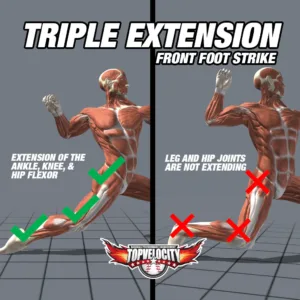 Triple Extension (3X) and Lower-Body Power: “3X” stands for triple extension, referring to the explosive extension of the ankle, knee, and hip joints during the pitching delivery. Think of the motion of a vertical jump – that’s triple extension driving you off the ground. In pitching, a powerful drive off the mound through triple extension generates massive ground reaction forces that translate into ball velocity. Studies show that pitchers who produce higher ground reaction forces with their drive leg achieve greater throwing velocity and put less stress on the arm. In other words, using your legs more effectively lets you throw harder without overloading your elbow and shoulder. High-velocity pitchers also exhibit strong front-leg bracing: research has found that the braking force of the stride leg at landing correlates strongly with pitch speed. The 3X program trains you to maximize both the back-leg drive and front-leg brace, turning your lower half into a powerful engine for your fastball.
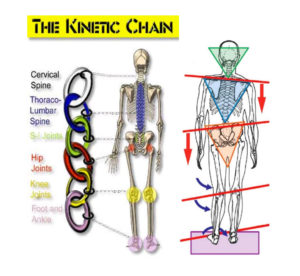 Efficient Kinetic Chain & Energy Transfer: The magic of the 3X approach is that it optimizes how energy flows from your larger lower-body muscles up through your core and into the throwing arm. When you build a strong base (legs and hips) and time your movements correctly, you create a whip-like effect: legs drive first, hips rotate, trunk stays back then fires, and finally the arm accelerates last. Each segment of the body amplifies the force and passes it along – this is the kinetic chain in action A well-timed kinetic chain means you rely less on your arm muscles for velocity (reducing injury risk) and can achieve higher speeds with the same effort. Research example: Stodden et al. (2001) found that pitchers who delayed trunk rotation (keeping the shoulders closed while the hips opened) threw significantly harder. Another study linked greater forward trunk motion at release to increased velocity with lower arm stress. The take-home message: by training the 3X mechanics, you are training your body to use ground force and core torque to power the ball, rather than just your arm.
TopVelocity’s holistic approach has rebuilt careers of even pro pitchers. To quote former MLB pitcher David Aardsma: “The 3X Pitching Velocity Program rebuilt my career… in 4 months I was back in Big League ball”. Now let’s translate these principles into a concrete off-season plan for you. We will break the 3-month program into phases, each with specific goals and training focuses, all aligned with the 3X methodology.
3-Month Off-Season Pitching Velocity Program (Phase-by-Phase)
To gain substantial velocity by spring, you’ll systematically attack each component of pitching performance over a roughly 12-week off-season. Below is a phase-by-phase breakdown of the off-season pitching program, structured around TopVelocity’s 3X model:
Month 1: Foundation – Mobility, Mechanics, and Technique
Goals: Establish a solid foundation of mobility and mechanics. In the first 4 weeks, you’ll focus on improving your flexibility, learning 3X mechanics (triple extension and separation) at lower intensity, and building fundamental strength. This phase is about quality of movement over quantity of weight or volume.
-
Mobility & Flexibility Routine: Start with a daily mobility program targeting your ankles, hips, T-spine, and shoulders. This could include hip flexor stretches, ankle dorsiflexion drills, shoulder capsule mobility, and thoracic spine rotations. Improved mobility will “free up” your body to achieve the positions needed for an explosive delivery. For example, greater hip internal rotation range will allow you to rotate your hips farther and sooner, increasing separation. Research has shown that pitchers with poor hip mobility not only throw slower but also have higher injury risk – so dedicating time to mobility now will pay off in velocity and durability later. Aim to spend 20–30 minutes on mobility work in your warm-ups or separate sessions.
-
Mechanical Drills (Low Intensity): This month is the time to retrain your pitching mechanics with an emphasis on the lower half. Under the guidance of the 3X Pitching program, incorporate drill work that teaches you how to drive off the mound with triple extension and achieve proper hip-to-shoulder separation. Common drills may include stance drills, stride drills, and in particular TopVelocity’s proprietary medicina-ball throwing drills The 3X program uses overloaded med balls (1–2 lb) in place of a baseball for many drills – allowing you to train your trunk and lower body explosiveness without overstressing your throwing arm. For instance, a drill might have you mimic your pitching delivery by throwing a med ball against a wall using your hip rotation and trunk, while your arm is in a safe position. This kind of drill ingrains the feeling of leading with your hips and driving through the target, and studies indicate it can significantly reduce arm stress compared to high-volume throwing (since the weight is transferred to the body). Perform drill movements at controlled speed initially; the goal is to nail the sequencing (legs → hips → trunk → arm) rather than maxing out intensity. As Brent Pourciau (TopVelocity founder) notes, learning triple extension must come after learning good separation timing – otherwise you’re putting the cart before the horse. So, concentrate this month on timing: feeling the back leg drive push off (3X) just before front foot strike, while the upper body stays back, then feeling the trunk whip through late. This sets the stage for explosive power later on.
-
Strength Foundation (Beginner S&C Program): Begin an Olympic-based strength and conditioning program with light to moderate loads. In the first month, focus on mastering technique in exercises like squats, deadlifts, power cleans, lunges, and core stability moves. If you’ve never done Olympic lifts, start under supervision (or at a 3X Velocity Camp/coach if possible) with basic variations – e.g. clean pulls or jump shrugs – to learn triple extension movement with weight. The TopVelocity program provides a USAW-certified beginner lifting program to follow. The aim is to develop basic strength in your posterior chain (glutes, quads, hamstrings) and core. Strong legs and core will be crucial for generating ground force in later phases. Keep rep ranges in moderate zone (e.g. 3–4 sets of 8–10) initially and focus on explosive intent rather than absolute weight. By Month 1’s end, you should feel increased lower-body stability and better kinesthetic awareness of using your legs in the pitching motion.
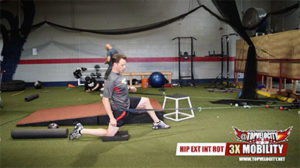 Mobility & Flexibility Routine: Start with a daily mobility program targeting your ankles, hips, T-spine, and shoulders. This could include hip flexor stretches, ankle dorsiflexion drills, shoulder capsule mobility, and thoracic spine rotations. Improved mobility will “free up” your body to achieve the positions needed for an explosive delivery. For example, greater hip internal rotation range will allow you to rotate your hips farther and sooner, increasing separation. Research has shown that pitchers with poor hip mobility not only throw slower but also have higher injury risk – so dedicating time to mobility now will pay off in velocity and durability later. Aim to spend 20–30 minutes on mobility work in your warm-ups or separate sessions.
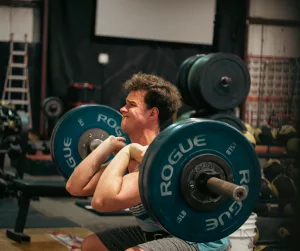 Strength Foundation (Beginner S&C Program): Begin an Olympic-based strength and conditioning program with light to moderate loads. In the first month, focus on mastering technique in exercises like squats, deadlifts, power cleans, lunges, and core stability moves. If you’ve never done Olympic lifts, start under supervision (or at a 3X Velocity Camp/coach if possible) with basic variations – e.g. clean pulls or jump shrugs – to learn triple extension movement with weight. The TopVelocity program provides a USAW-certified beginner lifting program to follow. The aim is to develop basic strength in your posterior chain (glutes, quads, hamstrings) and core. Strong legs and core will be crucial for generating ground force in later phases. Keep rep ranges in moderate zone (e.g. 3–4 sets of 8–10) initially and focus on explosive intent rather than absolute weight. By Month 1’s end, you should feel increased lower-body stability and better kinesthetic awareness of using your legs in the pitching motion.
By the end of Month 1, you’ll notice improved mobility (allowing deeper dips and strides), cleaner mechanics (you understand how to achieve separation and drive through triple extension), and a baseline of strength forming. Many athletes even report a small velocity bump (~1-2 mph) just from moving more efficiently. With this foundation, you’re ready to build serious power in the next phase.
Month 2: Building Power – Strength, Explosiveness, and Advanced Drills
Goals: Transform the sound mechanics from Month 1 into explosive power. In weeks 5–8, you will increase the intensity of both strength training and sport-specific power drills. The focus is on gaining muscular power and speed – to start converting strength into additional MPH on the radar gun.
-
Intensified Olympic Strength Training: This month, ramp up the weight training program. If you built a base of technique in cleans, squats, etc., now you can increase load and reduce reps for power development. The TopVelocity 3X program’s Olympic-based S&C is “science-built to optimize mass, power, and motor control for an explosive athlete”topvelocity.net. That means following a structured progression in lifts. For example: performing power cleans and front squats in the 3-5 rep range to train explosive strength, and trap bar deadlifts or split squats to target the legs unilaterally (important for pitchers). Research supports this approach – a systematic review found that well-designed resistance training programs do increase throwing velocity in athletespmc.ncbi.nlm.nih.gov. In TopVelocity’s experience, Olympic lifts are particularly effective because they mimic the explosive triple extension of pitchingtopvelocity.net. As you push heavier weight (with good form), your legs and core learn to generate more force. You might lift around 3 days/week, with recovery and mobility on off days. By the end of Month 2, many pitchers see noticeable gains in jump performance or med-ball toss distance – signs your lower-body power is improving, which correlates to potential velocity gains.
-
Advanced Throwing Drills & Increased Throwing Intensity: Continue the 3X throwing drills, now with higher intensity and complexity. For instance, you might progress from basic medicine ball drills to targeted plyometric drills like jump-and-throw exercises or introduces weighted baseball throws in moderation. (If using weighted baseballs, stick to the TopVelocity guidelines for overload/underload – typically overload with med balls, underload sparingly – to avoid “overdosing” on stress). The program might include mock mound drills focusing on a powerful hip drive: e.g. doing a crow-hop into a throw or using resistance. This is a great time to incorporate specialized tools like the TopVelocity Sled and Stride Excelerator for developing your lower half:
The TopVelocity Sled adds resistance to your pitching stride, forcing you to push harder with your legs. By training against this weighted sled, pitchers learn to generate greater ground force with their drive leg and improve front leg bracing, which directly translates into higher pitch velocities. The Sled work also provides feedback on your mechanics (if you don’t drive correctly, the sled won’t move well), helping you refine your lower-body technique. Most importantly, this lower-body focus builds velocity without increasing arm stress, since you’re not overusing the arm during these drills. Similarly, the Stride Excelerator device can be used to groove an efficient stride and pelvic loading. The Stride Excelerator stabilizes the front hip and guides you into an optimal stride position – training you to direct your energy toward the target. It’s engineered to help you add 5+ mph by optimizing lower-half movement and timing, while also promoting proper biomechanics to minimize injury risk (Buy NOW). Incorporating these tools for a few drills each week will accelerate your learning curve and strength adaptation in the pitching motion. Learn the 5 reason the TopVelocity Sled is right for you. -
Core/Trunk Development: A lot of your new velocity will come from improved leg drive, but the trunk (core) is the crucial bridge between your lower body and throwing arm. Thus, dedicate part of this phase to developing rotational core power. This includes rotational medicine ball throws (side tosses, shot-put throws), cable or band rotational exercises, and possibly the use of TopVelocity’s Trunk Excelerator. The Trunk Excelerator is a specialized training vest that immobilizes your arms, forcing you to use your core to rotate powerfully (Buy NOW). By isolating trunk motion, it teaches you to generate velocity from hip and trunk rotation rather than arm. A case study by Aguinaldo & Escamilla (2019) demonstrated that about 86% of a pitcher’s energy transfer comes from trunk rotation and movement– highlighting how critical a strong, fast core is. Pitchers using the Trunk Excelerator have often reported a quick jump in velocity once the device is removed, because their trunk rotation became much more explosive and efficient. Even if you don’t have this device, you can achieve similar trunk-focused training with med ball drills and plyometric swings. Aim to increase the intensity of core work (e.g., throw heavier med balls or toss them further). A stronger trunk will also protect your spine and improve your balance on the mound.
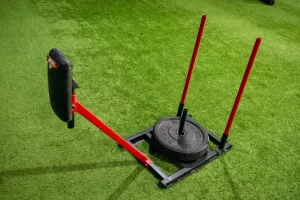 The TopVelocity Sled adds resistance to your pitching stride, forcing you to push harder with your legs. By training against this weighted sled, pitchers learn to generate greater ground force with their drive leg and improve front leg bracing, which directly translates into higher pitch velocities. The Sled work also provides feedback on your mechanics (if you don’t drive correctly, the sled won’t move well), helping you refine your lower-body technique. Most importantly, this lower-body focus builds velocity without increasing arm stress, since you’re not overusing the arm during these drills. Similarly, the Stride Excelerator device can be used to groove an efficient stride and pelvic loading. The Stride Excelerator stabilizes the front hip and guides you into an optimal stride position – training you to direct your energy toward the target. It’s engineered to help you add 5+ mph by optimizing lower-half movement and timing, while also promoting proper biomechanics to minimize injury risk
 By the end of Month 2, you should feel like a more powerful athlete. Expect improvements in your weight room numbers and explosiveness. Mechanically, your motion should now feature a more forceful drive off the rubber, a longer stride, and greater hip-shoulder separation (you might notice your torso staying closed longer and your lead foot landing more forcefully). Many athletes will test their fastball towards the end of this phase and see gains of a few MPH already. (It’s not uncommon to be up 3-5 mph at this point if you started with significant room for improvement.) Importantly, your arm should still feel healthy because you’ve built a strong base to support it. Month 3 will refine these gains and get you mound-ready.
Month 3: Specificity – Mound Integration, Conditioning, and Pre-Season Prep
Goals: Convert your new strength and power into game-ready performance. In the final 4+ weeks leading up to spring, the focus is on transitioning from training mode to pitching mode. You will integrate your velocity gains into full bullpen sessions, work on command at higher velocity, and condition your body to handle the demands of a season. This phase ensures you don’t just throw harder in a lab, but can do it consistently and safely on the field.
-
Mound Work and Throwing Progression: If you largely limited high-intent throwing earlier, Month 3 is when you ramp up bullpen sessions. Gradually increase the frequency and intensity of pitching off a mound. For example, start week 9 with a couple of 50-70% effort bullpens focusing on mechanics, and by week 12 build up to full-intent bullpens at 100% effort. Emphasize carrying over everything you learned – use your legs aggressively, explode through triple extension, and feel that delayed upper-body rotation. You should notice your fastball is now consistently harder. A key point: don’t sacrifice your newfound mechanics for a few extra mph. Sometimes pitchers get excited and revert to old habits when throwing at max intent. Stay disciplined and trust that the velocity will come from doing things right. Many pitchers find that not only is their fastball faster, but their ball spin is improved thanks to better mechanics. (Indeed, the TopVelocity methodology often leads to increased spin rate and optimized spin axis, improving the quality of all your pitches.) During this phase, also work on secondary pitches and command at your new velocity. The 3X program’s goal is not just a hard fastball in isolation – it’s a total upgrade of your pitching. With a stronger body and refined delivery, you should be able to maintain control even at higher speeds. If you find your command wavering, incorporate more flat-ground throwing for feel, or dial back a touch and build up again. By the end of the month, aim to throw a simulated game or two at full velocity to test your endurance and command.
-
Anaerobic Conditioning & Arm Care: As you approach the season, shift some focus to conditioning your arm and body for high-intensity, repeated efforts. The 3X program includes an anaerobic conditioning component to enhance stamina and recovery. This might include sprint intervals, sled drags, or shuttle runs that mimic the short bursts of pitching and running bases, with short rest – training your body to recover quickly between innings or outings. Additionally, continue dedicated arm care routines: this means rotator cuff strengthening exercises, scapular stability work, and forearm/elbow maintenance (e.g., using J-bands, light dumbbells, wrist weights, etc.). Also, don’t neglect rest and recovery – maintain mobility work, get sufficient sleep, and follow proper nutrition to support muscle recovery (a well-fueled body will gain strength and velocity faster). The goal is to enter the season in peak shape, with not just a lightning arm but also the endurance to sustain it. A well-conditioned pitcher can hold their new velocity deeper into games and bounce back faster between outings.
-
Final Tune-Up of Mechanics: In the last couple of weeks, do a review of your mechanics with video analysis if possible. Compare your current delivery to what it was in the fall. You should see improvements such as a more stable back leg, better external rotation in the drive hip, a longer stride, and more hip-shoulder separation at landing. If you have access to a TopVelocity coach or attended a camp, utilize your 3X video analysis report to pinpoint any remaining flaws Perhaps your front knee could brace harder, or your arm timing needs slight adjustment now that you’re moving faster. Making a minor tweak now can add another tick or two and, importantly, prevent any mechanical issue from causing inconsistency. This is also a good time to ensure you’re comfortable with your routine and mental approach with the new velocity – throwing harder can be an adjustment, so practice situations (like pitching with runners, throwing breaking balls after a high-velo fastball, etc.) to fully assimilate your gains.
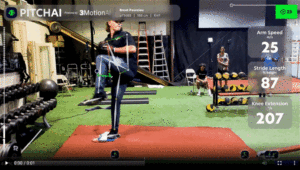 Mound Work and Throwing Progression: If you largely limited high-intent throwing earlier, Month 3 is when you ramp up bullpen sessions. Gradually increase the frequency and intensity of pitching off a mound. For example, start week 9 with a couple of 50-70% effort bullpens focusing on mechanics, and by week 12 build up to full-intent bullpens at 100% effort. Emphasize carrying over everything you learned – use your legs aggressively, explode through triple extension, and feel that delayed upper-body rotation. You should notice your fastball is now consistently harder. A key point: don’t sacrifice your newfound mechanics for a few extra mph. Sometimes pitchers get excited and revert to old habits when throwing at max intent. Stay disciplined and trust that the velocity will come from doing things right. Many pitchers find that not only is their fastball faster, but their ball spin is improved thanks to better mechanics. (Indeed, the TopVelocity methodology often leads to increased spin rate and optimized spin axis, improving the quality of all your pitches.) During this phase, also work on secondary pitches and command at your new velocity. The 3X program’s goal is not just a hard fastball in isolation – it’s a total upgrade of your pitching. With a stronger body and refined delivery, you should be able to maintain control even at higher speeds. If you find your command wavering, incorporate more flat-ground throwing for feel, or dial back a touch and build up again. By the end of the month, aim to throw a simulated game or two at full velocity to test your endurance and command.
 Anaerobic Conditioning & Arm Care: As you approach the season, shift some focus to conditioning your arm and body for high-intensity, repeated efforts. The 3X program includes an anaerobic conditioning component to enhance stamina and recovery. This might include sprint intervals, sled drags, or shuttle runs that mimic the short bursts of pitching and running bases, with short rest – training your body to recover quickly between innings or outings. Additionally, continue dedicated arm care routines: this means rotator cuff strengthening exercises, scapular stability work, and forearm/elbow maintenance (e.g., using J-bands, light dumbbells, wrist weights, etc.). Also, don’t neglect rest and recovery – maintain mobility work, get sufficient sleep, and follow proper nutrition to support muscle recovery (a well-fueled body will gain strength and velocity faster). The goal is to enter the season in peak shape, with not just a lightning arm but also the endurance to sustain it. A well-conditioned pitcher can hold their new velocity deeper into games and bounce back faster between outings.
By the conclusion of Month 3, you should be able to light up the radar gun come spring with an extra 5+ MPH, and do so with confidence in your durability and command. You’ve effectively built yourself into a stronger, more efficient pitcher over the off-season. Now it’s time to showcase that development on the field!
3X Velocity Camp: A Turnkey Solution to Accelerate Your Gains
While the above plan can be followed on your own, there’s an even more powerful way to fast-track these results: the TopVelocity 3X Velocity Camp. This immersive training camp is a turnkey off-season solution that packages all aspects of the 3X program into an intense, personalized experience. If you’re truly serious about increasing your pitching velocity (and want hands-on expert guidance), the 3X Velocity Camp might be your best investment.
At the 3X Velocity Camp, you spend several days at TopVelocity headquarters training directly under Coach Brent Pourciau and his team. The camp is designed to transform your mechanics and athleticism in a short period. Here’s what the camp offers:
-
Top Velocity artificial intelligence coaching for next level performance
Comprehensive 3X Evaluation: On Day 1, you undergo a full evaluation of your mobility, functional strength, pitching mechanics, and biomechanics. This includes high-speed video analysis and possibly biometric assessments to identify exactly where your velocity is leaking and what your body’s limitations are. You’ll receive a detailed 3X evaluation report pinpointing your areas for improvementtopvelocity.net. Many attendees are surprised to learn, for example, that their ankle mobility or core stability was a hidden factor holding back their velo – the evaluation brings these to light.
-
Personalized Instruction and Drills: Throughout the camp, you get one-on-one coaching in the 3X mechanics. The instructors will teach you the 3X pitching sequence step by step, including all the proprietary drills. Because this is hands-on, you’ll get instant feedback and corrections – accelerating your learning curve far beyond what you could do alone. You’ll practice the Level 1 3X drills under watchful eyes, ensuring you execute triple extension and separation correctly. The camp also includes USAW-certified Olympic lifting instruction, so you can safely learn and perform the key strength exercises. Essentially, the camp crams the crucial pieces of the 3-month program into a focused clinic, so you leave with polished technique and a clear understanding of how to train.
-
Year-Long Plan and Resources: One big advantage of the 3X Velocity Camp is that it doesn’t end when you go home. Every camp attendee gets access to the complete 3X Pitching Velocity Program (the same one we’ve described) including all its levels and manuals. You receive the 3X program ebooks, Mechanics Guides (Vol.1 & 2), the in-season and pre-season training programs, and an online course with unlimited access. In addition, you gain a TopV Player Locker online account and a full year of remote training support That means as you continue your off-season at home, you can communicate with the coaches, submit videos for analysis, and follow the program step by step with guidance. It’s truly a turnkey package – the camp jumpstarts your velocity gains, and then the system guides you for the rest of the year to continue improving and maintaining your new velocity.
-
Motivation and Competitive Environment: Let’s not forget the intangible benefit: attending a camp puts you in an environment surrounded by other driven athletes all pushing to get better. This atmosphere can light a fire in you. You’ll see other pitchers adding 5-10+ mph and learn from their successes too (Checkout the 3X Velocity Camp). The energy and focus of a camp can’t be replicated alone in a gym. Many players also report that being evaluated and instructed by Coach Brent (an accomplished pitcher and biomechanics specialist) gives them newfound confidence in the process. You leave knowing exactly what you need to do to throw 90+ and with the belief that it’s achievable – because you’ve felt the difference in just a few days of proper training.

In short, the 3X Velocity Camp is the ultimate off-season pitching program condensed into a powerful experience. It’s no coincidence that TopVelocity requires camp attendance for those who want the most out of the program – it consistently produces results. If you have the opportunity, it’s highly recommended to register for a 3X Velocity Camp and let the experts help you add that 5-10 mph in the fastest, most efficient way. Register NOW for the 3X Velocity Camp before it is SOLD OUT!.
(On a related note: TopVelocity also offers remote coaching, online camps, and an array of specialized equipment like the Stride Excelerator, Trunk Excelerator, and TopVelocity Sled through their store. These resources allow any player, anywhere, to access the 3X methodology. So even if you can’t attend in person, you can still train “the TopV way” at home with the right guidance and tools.)
Conclusion: Throw Harder This Spring – The Right Way
An off-season dedicated to the 3X Pitching Velocity Program can be career-changing. We’ve outlined how focusing on lower-body power, hip-shoulder separation, strength training, and proper conditioning can yield significant velocity gains for high school pitchers (and college players alike) in as little as three months. The key is following a structured, evidence-based plan. TopVelocity’s methodology isn’t a fad or a gimmick – it’s built on principles proven by both science and success stories on the mound. By training smarter (not just harder) this off-season, you’re not only going to increase your fastball velocity off-season, but you’ll do so with better command and reduced injury risk – a true win-win for your future in baseball.
Come spring, imagine toeing the rubber with greater confidence: you’ve added noticeable MPH to your fastball, your breaking pitches are sharper thanks to improved mechanics, and you know your body is stronger and more resilient than ever. Hitters will be in for a surprise when they face the “new you.” This is the payoff for the months of disciplined work.
If you’re ready to commit to this transformation, take action now. Use the 3-month template above to plan your training week by week. Re-read the science behind each element so you understand why you’re doing it – this will keep you motivated when workouts get tough. And strongly consider leveraging TopVelocity’s resources (the 3X Velocity Camp, or their online programs and equipment) to ensure you’re on the right track. There’s no substitute for expert instruction when it comes to something as technical as pitching mechanics.
This off-season pitching program can realistically help a dedicated high school player jump from, say, 80 mph to 85+ mph, or a college pitcher from mid-80s to 90+ by spring – those kinds of improvements change your opportunities in the game. It won’t be easy, but it will be worth it. By following TopVelocity’s 3X methodology, you’re training like the pros do (just look at the MLB pitchers who reclaimed their careers with 3X training). Now it’s your turn to put in the work.
Throw harder. Pitch smarter. Prevent injury. That’s the TopVelocity motto, and with the plan outlined here, it can be your reality. Commit to the process this winter, and come spring you’ll be reaping the rewards on the mound with a hotter fastball and a healthier arm. Good luck, and here’s to a velocity-packed off-season!
Sources:
-
TopVelocity 3X Pitching Program – Overview of included training components (mobility, throwing drills, Olympic S&C, etc.) Learn more.
-
TopVelocity Article – “Unlocking Elite Pitching: The Power of Hip to Shoulder Separation” (Brent Pourciau, 2025) – on the importance of separation and kinetic chain in velocity Learn more.
-
TopVelocity Article – “Basic Pitching Biomechanics” (Brent Pourciau, 2019) – evidence linking lower-half force production and hip-shoulder separation to velocity and reduced arm stress Learn more.
-
TopVelocity Product Info – Stride Excelerator – training device to add 5+ mph by improving lower-body mechanics while reducing injury risk Learn more.
-
TopVelocity Product Info – Trunk Excelerator – emphasizes trunk rotation; study cited showing ~86% of pitch energy from trunk motion (Aguinaldo & Escamilla, 2019) Learn more.
-
TopVelocity Article – “5 Reasons TopVelocity Sled is Best Pitching Training Device” – on developing lower-half power and its benefits for velocity and injury prevention Learn more.
-
TopVelocity Article – “Scientific Ground Force Link of Pitching to Olympic Lifting” (Elijah, 2023) – studies showing Olympic lifts increase pitchers’ ground forces and velocity Learn more.
-
TopVelocity 3X Velocity Camp Page – Details on camp structure and benefits (evaluation, one-on-one coaching, year-long program access) Learn more.
-
TopVelocity 3X Camp Promo – Science-backed claim of 5-10 mph velocity increase and comprehensive training system at camp Learn more.
-
TopVelocity Testimonials – Examples of velocity gains (David Aardsma, Cody Hall, etc.) achieved through the 3X program Learn more.